


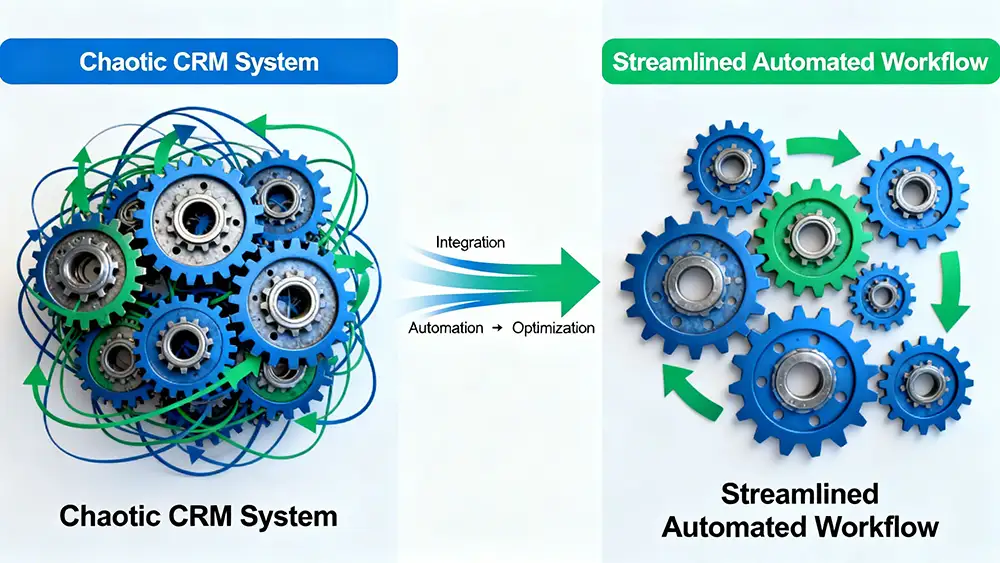
In this article, we introduce the CRM with automation functionality and workflows and explain why most CRM systems fail. We focus on automation-driven workflows, behavior-triggered communication, and integrated customer journeys—systems designed to support consistent follow-up and measurable revenue outcomes.
Many businesses invest in CRM platforms but struggle with low adoption, inconsistent follow-up, manual processes, and disconnected marketing and sales systems that prevent the CRM from delivering real value. Modern CRM platforms must serve as automation engines that integrate email, SMS, websites, and behavioral triggers, enabling businesses to manage customer journeys and maintain consistent engagement across channels.
Key Takeaways
- Why CRM adoption challenges, automation-driven workflows, behavior-triggered communication, integrated customer journeys, and CRM systems designed to support consistent follow-up and measurable revenue outcomes are foundational to effective CRM and automation
- How Many businesses invest in CRM platforms but struggle with low adoption, inconsistent follow-up, manual processes, and disconnected marketing and sales systems that prevent the CRM from delivering real value stem from fragmented data and manual processes
- How automation-based follow-up systems, lead lifecycle management, multi-channel communication workflows, CRM data organization, and structured customer journey automation enable segmentation, automation, and follow-up
- Why CRM structure determines lead quality, attribution, and lifecycle outcomes
Why This Concept Matters
CRMs serve as the operational backbone for marketing, sales, and customer retention. However, automation cannot function effectively without clean data, clearly defined lifecycle stages, and an intentionally designed system that supports how leads and customers actually move through the business.
Real-World Example
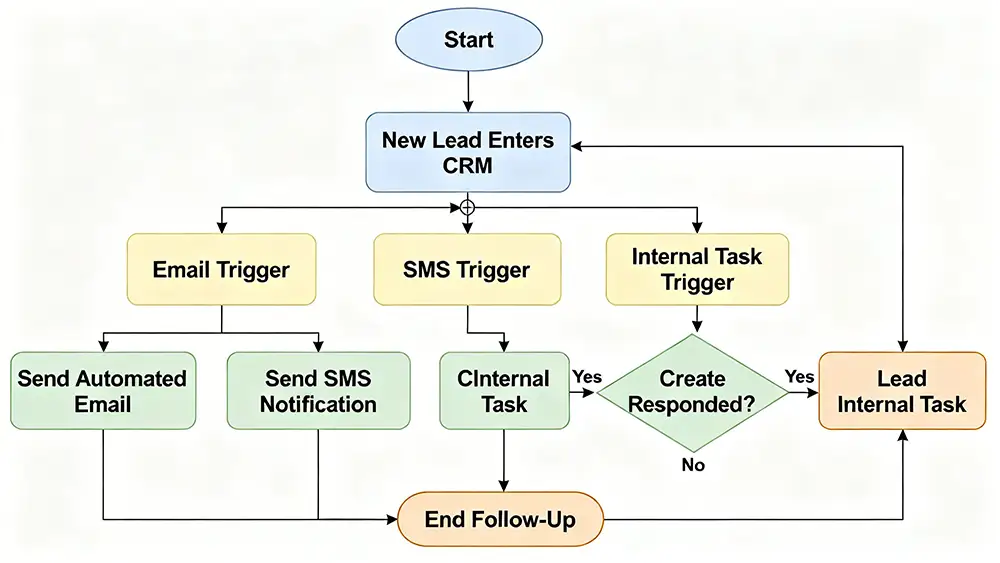
A company installs a CRM platform expecting improved lead management, but sales teams fail to follow up consistently; by implementing automated triggers for email, SMS, and website interactions, the CRM begins managing engagement automatically and conversions increase to illustrate CRM breakdowns (missed follow-ups, poor segmentation, data gaps) and how structured automation restores visibility, efficiency, and results.
Common Mistakes
Common mistakes and the main reason why most CRM systems fail relate to treating CRM software as a simple contact database rather than a system designed to manage customer relationships and revenue processes. Many businesses rely on manual follow-up instead of structured automation, fail to connect marketing channels such as email, SMS, and website activity, and implement CRM platforms without clearly defined automation-driven workflows.
Other frequent issues include overbuilt CRM configurations, disconnected tools that do not share data properly, poor field mapping, a lack of defined lifecycle stages for leads and customers, and automation that is implemented without an overall strategy guiding how prospects move through the customer journey.
What You Should Aim For
Use a CRM system that automatically manages lead follow-up, supports consistent communication across channels, improves sales team efficiency, and creates measurable improvements in conversion and customer retention to describe success:
- Centralized, clean customer data
- Clearly defined lifecycle stages
- Automation aligned to intent and behavior
- Consistent follow-up and attribution
- Scalable workflows without manual overhead
Supporting Data & Research
Industry experience consistently shows that CRM success is determined not by the platform itself but by how well it is implemented and maintained. This is a primary reason why most CRM systems fail, as businesses often invest in software without establishing clear processes, defined lifecycle stages, or consistent usage across marketing and sales teams.
Automation efficiency is directly tied to data quality and structure. Clean, well-organized data enables accurate segmentation, timely follow-up, and relevant communication. In contrast, incomplete or inconsistent data limits the effectiveness of automation and leads to missed opportunities.
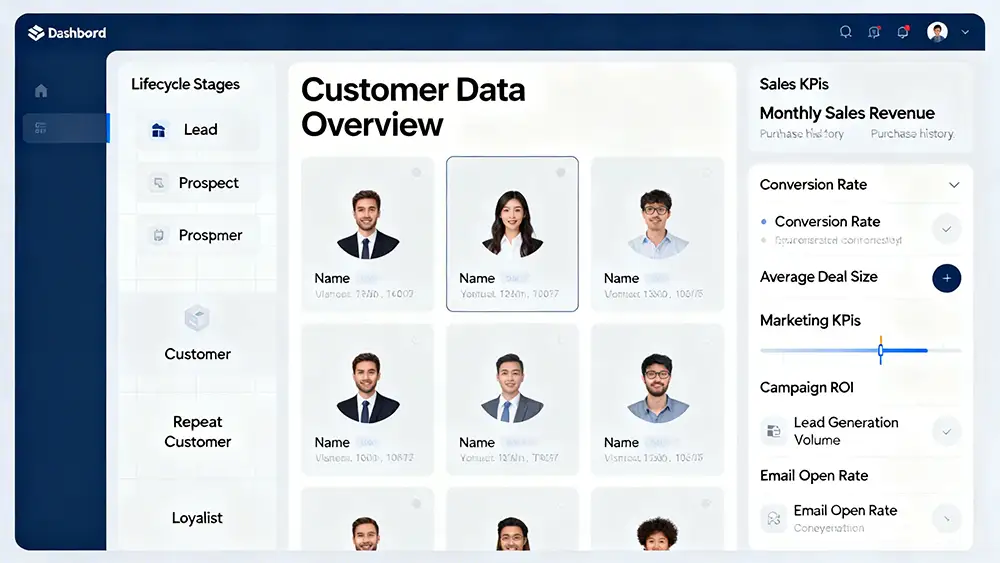
Accepted best practices also emphasize lifecycle management, where leads and customers are guided through clearly defined stages—from initial inquiry to conversion and retention. When these stages are not established or enforced, businesses struggle to track progress, measure performance, or optimize their customer engagement strategies.
Overall, CRM systems perform best when they are treated as operational frameworks rather than standalone tools, supported by structured data, intentional automation, and clearly defined customer journeys.
Frequently Asked Questions
How does automation improve CRM user adoption?
Automation handles repetitive tasks like follow-ups and data entry, which makes the system more valuable and less burdensome for teams to use, thereby increasing adoption.
What is the first step to fixing a broken CRM?
The first step is to audit your data and processes. You need to understand what data is missing or incorrect and where manual workflows are causing bottlenecks before you can design an effective automation strategy.
Can a CRM automatically send emails and text messages?
Yes, when integrated correctly, a CRM can trigger personalized emails and SMS messages based on customer behavior, lifecycle stage, or time-based rules.
What are lead lifecycle stages in a customer relationship tool?
Lifecycle stages are defined steps that track a contact’s progression from a new lead to a marketing qualified lead, sales qualified lead, opportunity, and finally, a customer. They provide clarity on where each contact is in the journey.
Why is clean data so important for automation?
Automation relies on accurate data to function correctly. Without clean, structured data, automated workflows can trigger the wrong actions, send incorrect messages, and lead to poor customer experiences.
How do you align marketing and sales within a single platform?
Alignment is achieved by creating a shared view of the customer journey, using common definitions for lead stages, and automating the handoff process between marketing and sales to ensure no leads are dropped.
What's a common mistake when setting up automated workflows?
A common mistake is building complex workflows without a clear strategy. Automation should be designed to achieve a specific goal, such as nurturing a lead or onboarding a new customer, not just for the sake of automating.
How can a business measure the success of its customer management platform?
Success can be measured through metrics like lead conversion rates, sales cycle length, customer lifetime value, and team efficiency gains. A well-structured system provides clear attribution for these outcomes.
Is it better to have a simple or complex system?
It’s best to start simple and build complexity as needed. A successful system is one that is tailored to your specific business processes and can scale with your growth, rather than being overly complex from the start.
What role does a website play in a CRM automation strategy?
The website is a primary source of data. Form submissions, page visits, and content downloads can act as triggers that enroll contacts into relevant automation sequences within the CRM.
Webpuzzlemaster Digital Marketing Services
Webpuzzlemaster Digital Marketing Agency designs CRM and automation systems that connect marketing, sales, and customer engagement across multiple channels. By integrating websites, messaging platforms, and automated workflows, businesses create structured systems supported by high-performing website experiences that guide users toward meaningful action, ensuring reliable follow-up and measurable growth.
Led by Ruth Kuttler, our approach focuses on building a central source of truth for your customer data and designing automation that manages follow-up, segmentation, and engagement across the entire customer journey. Structured customer data also supports greater visibility in AI-generated search answers and recommendation-driven discovery platforms, helping marketing activity and digital authority work together as part of a unified growth strategy.
About the Author
Ruth Kuttler, AI Visibility Engineer™ and Digital Strategy Architect, specializes in CRM automation, AI-driven marketing systems, and structured digital growth frameworks for modern businesses.
With over a decade of experience, Ruth helps local businesses move beyond simple contact storage to build intelligent, automated systems. Her expertise lies in connecting disparate marketing and sales tools into a cohesive ecosystem. She focuses on creating workflows that not only improve efficiency but also deliver measurable ROI and enhance the customer journey.
Your Next Step
Book a CRM and Automation Strategy Consultation to evaluate how automation-driven workflows can transform your CRM into a reliable system for managing leads, follow-up, and long-term customer growth.