


Introduction
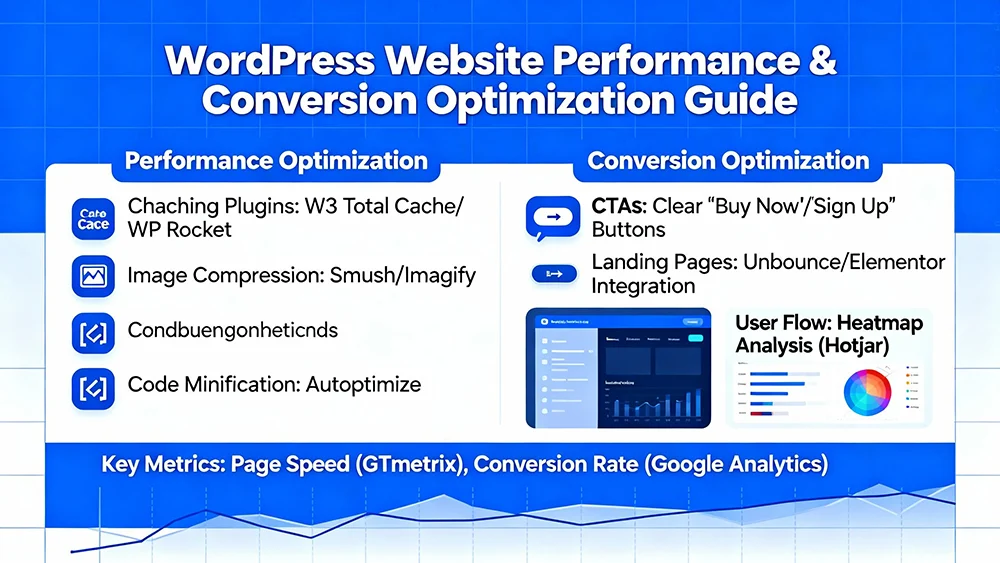
Do you ever wonder why your website traffic doesn’t translate to quality leads or sales—even with consistent marketing efforts? For service-based businesses, professional firms, and ecommerce brands using WordPress, the answer often lies in the fundamental aspects of your website: site speed, Core Web Vitals, mobile-first UX, clean site architecture, conversion-focused layouts, technical SEO, accessibility, and performance tuning. These aren’t just technical dreams; they’re non-negotiables in an age where slow page load times, clunky user experiences, and high bounce rates destroy trust and conversion opportunities.
The Website Performance & Conversion Engine addresses these very issues—ensuring your technical foundations work seamlessly for both visitors and search engines, so every marketing dollar and campaign effort counts. In today’s hyper-competitive landscape, businesses can’t afford to bleed leads due to avoidable mistakes in their WordPress setup.
Key Takeaways
What you’ll learn: What you’ll learn:
- Why are site speed, Core Web Vitals, mobile UX, clean architecture, conversion-first design, technical SEO, and performance tuning vital to all digital marketing efforts?
- How the Engine tackles common pain points like slow loading, poor navigation, and unqualified leads
- The role of caching, CDN, image optimization, streamlined plugins, semantic structure, intuitive navigation, strong CTAs, fast hosting, and UX-driven content for improved rankings and conversions
- How optimized performance strengthens ads, SEO, and business growth
Why This Concept Matters
If you’ve ever invested in ads or spent time on SEO only to see weak results, the problem may not be your marketing tactics—it’s often your underlying WordPress website performance optimization. A slow, bloated, or technically fragile site wastes traffic by frustrating users, driving up bounce rates, and undermining trust before a potential customer ever reads your offer.
Conversely, a high-performing, technically sound website acts like a growth multiplier: improving every marketing channel, increasing the quality and quantity of leads, and earning credibility with both users and search engines. For local and service-based businesses, performance optimization isn’t an option; it’s the bedrock supporting your entire digital marketing investment.
Real-World Example
Consider a well-regarded local service company. They attract solid traffic through local SEO and paid advertising but suffer from high bounce rates and inbound leads that rarely convert. The site loads slowly, especially on mobile devices, and its navigation structure is disorganized.
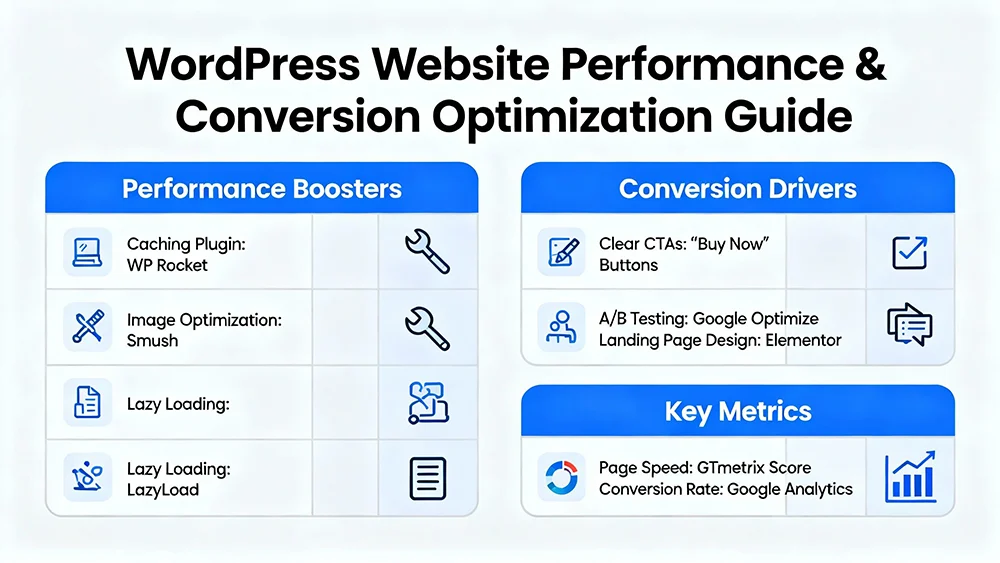
After investing in WordPress website performance optimization—upgrading hosting, implementing caching and a CDN, reducing plugin clutter, optimizing images, and redesigning for mobile UX—the difference is night and day. User flows become intuitive, page loads are nearly instant, and every call to action stands out. Within months, bounce rates drop significantly. The leads that do come in are more qualified, stick around longer, and convert at a much higher rate.
Common Mistakes
Many business owners and agencies make the same costly mistakes, including:
- Excessive use of plugins (leading to slowdowns, conflicts, and security risks)
- Neglecting mobile-first UX, even though most users browse and convert via smartphones
- Prioritizing flashy design over functionality and performance
- Ignoring page structure and content hierarchy makes it hard for visitors to find what they need
- Unclear or missing calls to action, so visitors don’t know what comes next
- Disregarding Core Web Vitals and accessibility standards which damages rankings and user satisfaction
All these contribute to higher bounce rates, unqualified leads, and wasted ad spend—precisely the pain points every growing business wants to avoid.
What You Should Aim For
Imagine your website as your top-performing salesperson working 24/7. Here’s what a high-performing, conversion-centric website looks like:
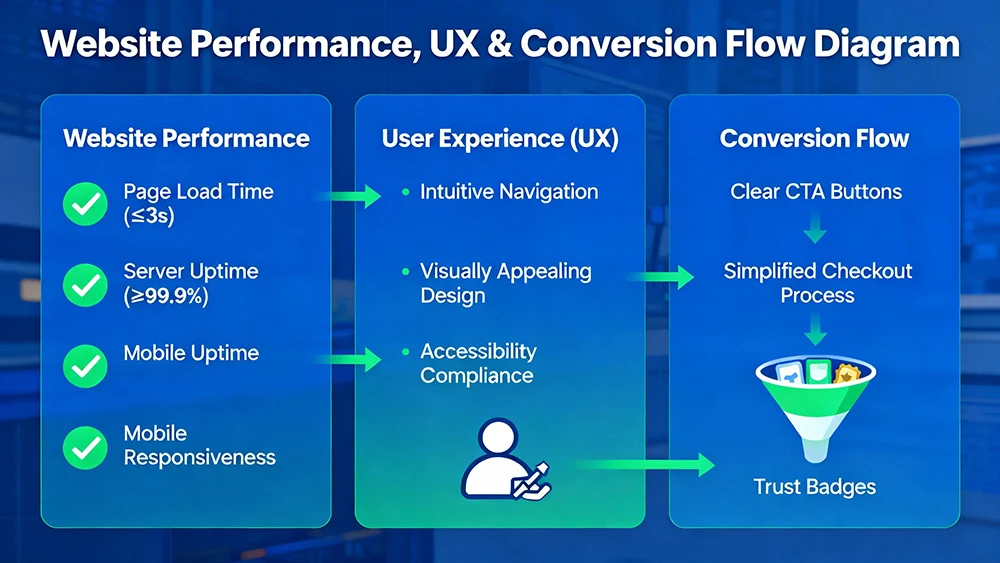
- Blazing fast load times and lean, optimized code
- Mobile-first, fully responsive design ensuring a consistent experience across devices
- Clear structure and UX, with intuitive navigation and scannable, prioritized content
- Prominent calls to action and trust-building elements (testimonials, certifications, guarantees)
- Integrated analytics and tracking for ongoing performance and conversion measurement
Supporting Data & Research
Multiple studies and real-world tests have shown:
- A one-second delay in load time can reduce conversions by 7% or more
- Over 50% of mobile visitors will leave a site if it takes longer than three seconds to load
- Poor Core Web Vitals performance correlates with lower search and AI visibility
- Well-optimized, accessible pages earn more engagement, higher rankings, and better user satisfaction
- Local businesses report improved conversion rates and higher-quality leads after technical site upgrades
Investing in WordPress website performance optimization directly impacts your bottom line by capturing more (and better) conversions from existing traffic.
Frequently Asked Questions
What is WordPress website performance optimization?
It’s the process of improving site speed, technical health, UX, and conversion elements to deliver fast, seamless, and effective visitor experiences that drive better lead quality and conversions.
How does site speed impact lead quality?
Fast-loading sites reduce bounce rates and keep high-intent visitors engaged, increasing the likelihood they’ll complete forms or contact you
What are Core Web Vitals and why do they matter?
Core Web Vitals are a set of metrics from Google focused on loading performance, interactivity, and visual stability. They significantly affect both rankings and user trust.
Do plugins slow down WordPress sites?
Too many plugins, or poorly coded plugins, slow down your site and impact stability. Minimize plugin use and choose quality, lightweight alternatives.
Is mobile optimization really necessary?
Yes—most local business visitors browse on mobile. A mobile-first design is essential for engagement, visibility, and conversions.
Will optimizing performance help my SEO?
Absolutely. Google prioritizes fast, technically sound sites. Improved speed and structure mean better rankings and more organic traffic.
How do UX and navigation affect lead quality?
Easy-to-navigate, intuitive sites help visitors find what they’re looking for, increasing trust and the likelihood they’ll reach out or convert.
When should I consider rebuilding my WordPress website?
If your site is outdated, slow, or hard to update, a rebuild with performance as the core focus often delivers the best ROI.
How do optimized websites benefit ads and retargeting?
Fast, high-converting sites improve ad landing page scores, lower ad costs, and increase conversion rates from paid traffic.
What are the most important fixes to prioritize?
Start with speed (hosting, caching, image optimization), mobile-first design, structured content hierarchy, clear CTAs, and tracking/analytics.
Webpuzzlemaster Web Design & Development Services
Delivered by Webpuzzlemaster Digital Marketing Agency, led by Ruth Kuttler, Webpuzzlemaster delivers the Website Performance & Conversion Engine—a strategic system that turns your WordPress site into a faster, cleaner, higher-converting asset that attracts better leads and drives more booked appointments. We focus on the levers that actually move revenue: Core Web Vitals, mobile-first UX, streamlined site architecture, and conversion-focused page structure that makes it easy for high-intent visitors to take the next step.
This isn’t “speed tweaks” in isolation. Performance is integrated with UX and conversion strategy so every channel works harder: ads convert at a higher rate, SEO traffic sticks, and your site builds trust immediately through clear messaging, proof elements, and frictionless calls to action. We also align your technical foundation with modern visibility requirements—supporting AI-driven discovery through structured content, clean data signals, and trackable user journeys—so you’re positioned for 2026 search and answer engines, not just yesterday’s SEO.
About the Author
Written by Ruth Kuttler, AI Visibility Engineer™ & Digital Strategy Architect. Ruth specializes in building high-performance WordPress websites that don’t just look polished—they load fast, communicate value clearly, and convert the right visitors into qualified leads. Her work combines technical performance engineering, mobile-first UX, and conversion strategy to eliminate the common bottlenecks that waste traffic and ad spend.
Ruth’s approach is performance-led and measurable: tighten site speed and Core Web Vitals, simplify user paths, strengthen trust signals, and ensure every page has a clear conversion goal with tracking in place. The outcome is a website that supports your entire growth stack—SEO, advertising, and follow-up systems—while improving lead quality and creating predictable conversion momentum.
Your Next Step
Book a Website Performance Consultation
Identify the highest-impact opportunities across speed, UX flow, technical foundations, and conversion strategy—and leave with a prioritized action plan tied directly to measurable ROI.