

Introduction
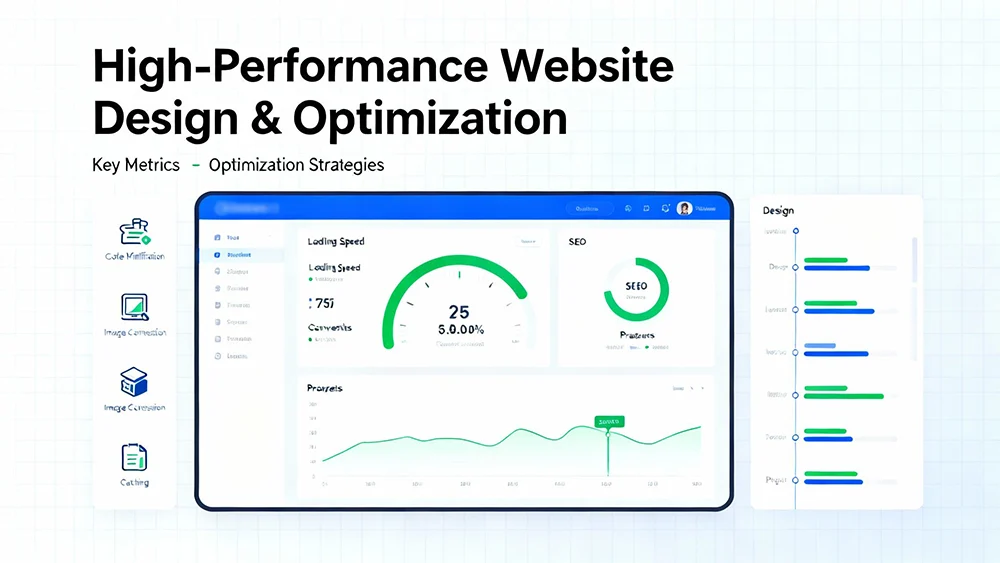
For local businesses, professional services, healthcare providers, retailers, and regional brands, your website is more than just a digital brochure—it’s your most powerful tool for attracting leads and driving sales. Yet, most stumble because they ignore the essential foundations: website performance optimization, Core Web Vitals, UX design, conversion architecture, mobile-first responsiveness, and technical WordPress health. Slow load times, high bounce rates, low conversions, mobile frustration, confusing navigation, weak trust signals, and poor search visibility are what hold so many back. That’s why a true Website Performance & Experience Engine is essential for success in today’s competitive local landscape.
Key Takeaways
What you’ll learn:
- Why website performance optimization, Core Web Vitals, UX design, conversion architecture, mobile-first responsiveness, and technical WordPress health underpin all digital marketing
- How the Engine addresses slow load times, high bounce rates, low conversions, mobile frustration, confusing navigation, weak trust signals, and poor visibility
- How structured content architecture, AI-powered SEO strategy, CRM automation workflows, local visibility signals, trust elements, and reputation management systems improve rankings, engagement, and conversions
- What this means for your ads, SEO, and long-term growth
Why This Concept Matters
Your website’s performance isn’t just a technical detail. If your site is slow, clunky, or fragile, it wastes precious traffic from ads, erodes your SEO opportunity, and instantly undermines trust with visitors. Every dollar spent driving traffic is diminished if your site can’t keep up.
But when you treat your website as a true Performance & Experience Engine—prioritizing speed, seamless UX, robust structure, conversion-driven layouts, and healthy, optimized WordPress foundations—it amplifies every marketing channel. Your ads become more cost-efficient, SEO performance improves, visitors engage more deeply, and trust is built with every click.
Real-World Example
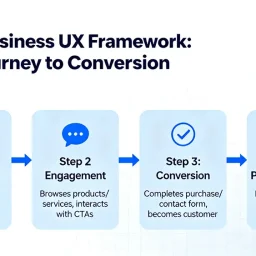
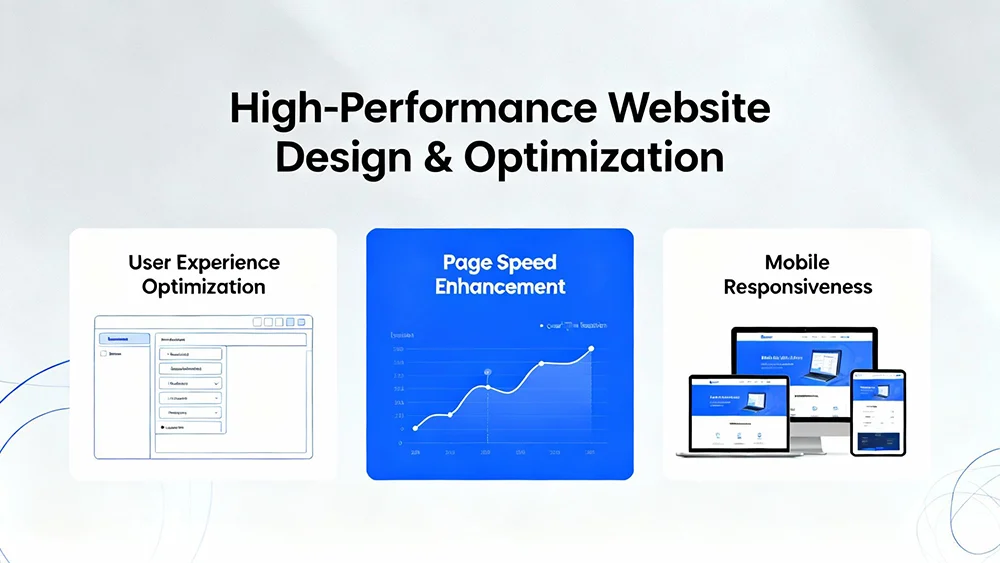
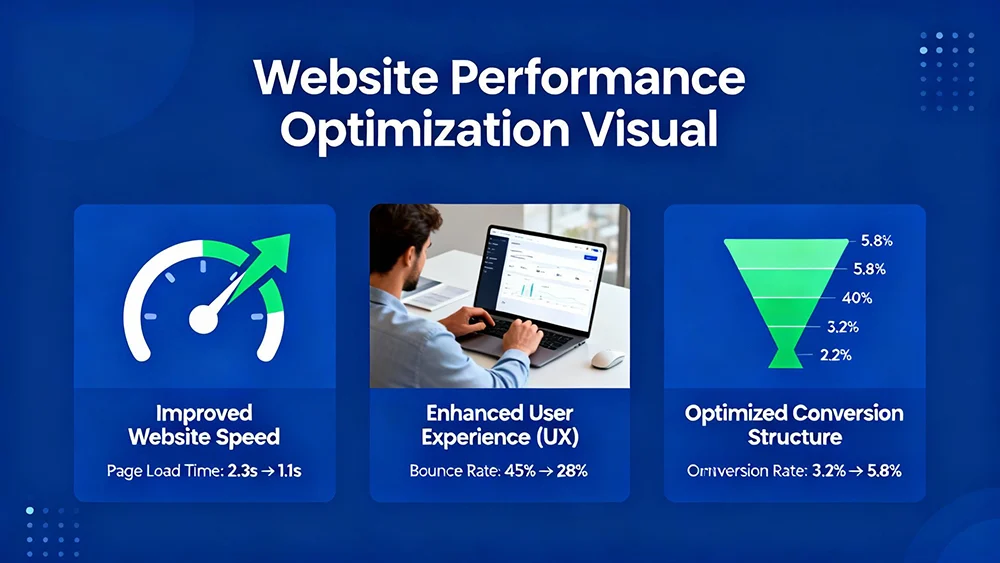
A local business with a slow, outdated site runs ads but sees high bounce rates and low conversions. Every visit is a missed opportunity—mobile visitors struggle to navigate, and most leave before engaging. After investing in website performance optimization, improving page speed, redesigning UX structure, refining calls to action, and ensuring mobile responsiveness, the same business sends the exact same ad traffic to their new site. Conversion rates surge, more leads flow in, and the cost per acquisition drops significantly. This is the Website Performance & Experience Engine at work—unlocking ROI from channels that previously underperformed.
Common Mistakes
Too many local businesses fall into these traps:
- Bloated themes that make pages sluggish and unresponsive
- Poor hosting that can’t keep up during traffic spikes
- Uncompressed or oversized images that delay load times
- Cluttered layouts and confusing navigation that leave users frustrated
- Weak calls to action that don’t inspire action or trust
- Ignoring technical errors that silently hurt your rankings
- Missing analytics that leave you blind to what’s working
- Neglecting mobile optimization so mobile users bail quickly
Each of these missteps chips away at your ability to win more business online. You wouldn’t pay for ads to send visitors to a broken store—don’t make the same mistake with your website.
What You Should Aim For
A high-performing, conversion-focused website should deliver:
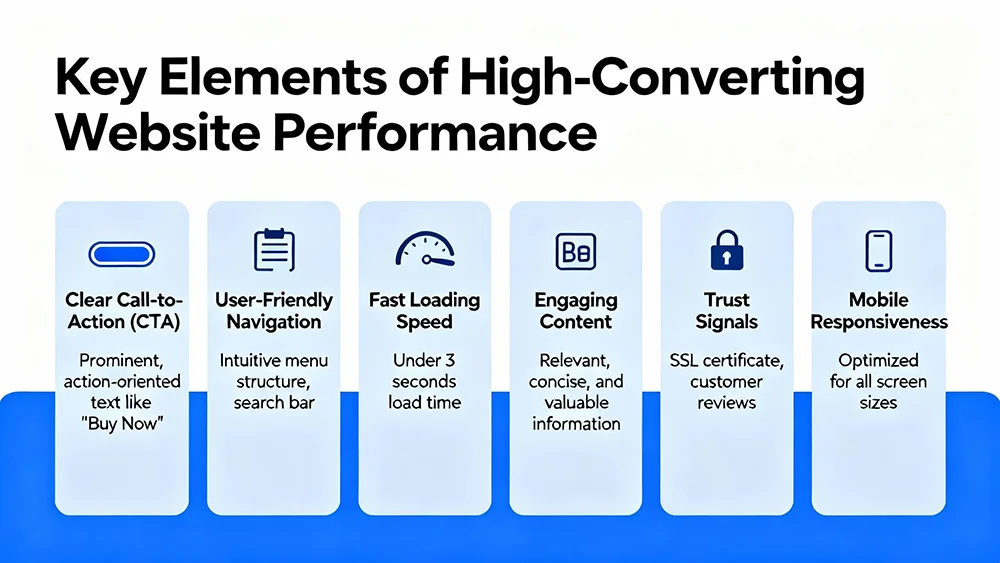
- Fast load times and clean, streamlined code for instant, frustration-free access
- Mobile-first, responsive design so every user has a smooth experience, no matter their device
- Clear structure and intuitive user experience (UX) enabling visitors to find exactly what they need
- Strong calls to action and trust elements (like reviews, testimonials, and certifications) that guide users toward contacting or buying
- Proper analytics and tracking to measure performance and double-down on what works
- Structured content architecture for logical navigation and greater search and AI visibility
- Reputation management systems to highlight social proof and competitive positioning
Supporting Data & Research
Research consistently shows that—even for small, local businesses—website performance dramatically impacts every key result:
- Every second delay in load time increases bounce rates, decreasing engagement and conversions.
- Google’s Core Web Vitals are now a known ranking factor; sites that load faster, are stable, and respond quickly see better search impact.
- Mobile-first users dominate local searches, and a poor mobile experience directly drives potential leads to competitors.
- Conversion rates rise when visitors experience quick load times, clear UX, easy navigation, persuasive calls to action, and trust signals on every page.
- AI-powered assistants are increasingly prioritizing technically sound, high-performing sites in their responses.
Improving performance isn’t just a technical upgrade—it’s a business growth strategy for anyone relying on digital leads and sales.
Frequently Asked Questions
How does website performance impact my business’s online results?
A fast, high-performing website retains more visitors, lowers bounce rates, improves search and AI visibility, and converts more leads from the same amount of traffic—directly boosting your return on investment.
What are Core Web Vitals, and why should I care about them?
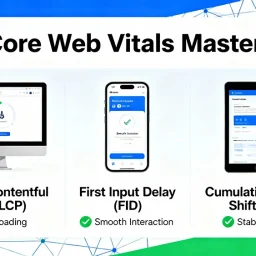
Core Web Vitals are essential Google metrics that measure how quickly your site loads, how soon it becomes usable, and how stable it is during use. Scoring well on these boosts SEO and user trust.
What’s the best way to improve my website’s UX?
Focus on clean layouts, logical navigation, clear calls to action, and responsive, mobile-first design.
Does my hosting affect performance?
Absolutely. Poor hosting equals slow load times, downtime, and poor user experience. Invest in reliable, speedy web hosting.
How do I prioritize fixes for my underperforming website?
Start with site speed, remove code bloat, compress images, simplify navigation, upgrade hosting, add strong calls to action, and ensure mobile optimization.
What role does structured content architecture play?
Well-structured content helps both users and search/AI engines rapidly understand your services, boosting engagement, rankings, and conversions.
Why is mobile-first design critical?
More than half of local search is mobile. If your site doesn’t perform well on phones, you’ll lose leads to competitors who do.
What analytics should be in place to measure success?
Google Analytics, conversion tracking, and heatmaps reveal exactly how users interact with your site and where improvements are needed.
How do AI-powered SEO strategies interact with website performance?
Great site performance complements AI-powered SEO, as search engines and AI assistants increasingly favor sites that are fast, stable, and easy to index.
Webpuzzlemaster Website Performance & Conversion Services
Webpuzzlemaster Digital Marketing Agency, led by Ruth Kuttler, builds and optimizes high-performance WordPress websites with fast load times, clean structure, conversion-focused UX, AI-powered SEO alignment, CRM and automation integration, local visibility enhancements, and reputation systems to ensure your site becomes a true engine for leads and revenue.
About the Author
Written by Ruth Kuttler, AI Visibility Engineer™ & Digital Strategy Architect and Owner of Webpuzzlemaster Digital Marketing Agency. Ruth specializes in high-performance WordPress builds, UX that reduces friction, conversion strategy that turns traffic into leads, and the technical foundations that make your site fast, indexable, and AI-ready—so your visibility compounds across Google, Bing/Copilot, and modern answer engines.
Your Next Step
Ready to turn your website into a high-conversion performance engine—not just a digital brochure?
Book a consultation to identify the fastest wins across speed, Core Web Vitals, UX flow, tracking, technical SEO, and conversion leaks, then map a prioritized plan to increase qualified leads and revenue with measurable ROI.