

Introduction
The rapid evolution of digital discovery platforms is reshaping how businesses compete for online visibility. The AI Visibility Engine™ represents a paradigm shift for local businesses, professional service providers, healthcare practices, ecommerce brands, and regional organizations adapting to a landscape dominated by AI-driven search and answer engines.
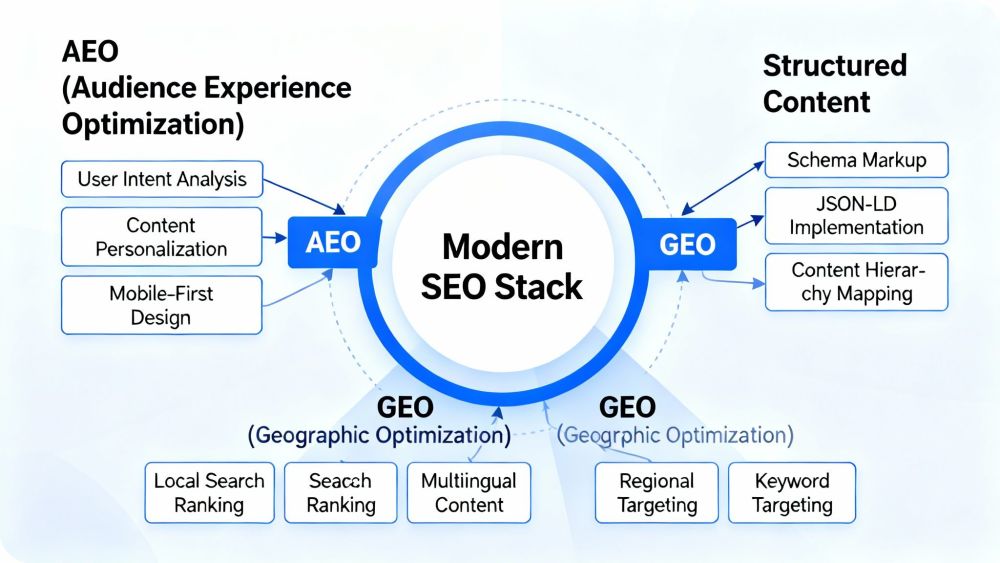
Where keywords once ruled, the new competitive battleground is defined by answer engine optimization (AEO), generative engine optimization (GEO), and structured content that signals clear authority and entity understanding. Companies facing declining organic visibility, traffic siphoned by AI answers, and outdated content structures need a future-proof solution. The AI Visibility Engine™ leverages the modern SEO stack to capitalize on entity mapping, structured content, and AI-aligned optimization, helping businesses reclaim and enhance their visibility.
Key Takeaways
- Why answer engine optimization (AEO), generative engine optimization (GEO), structured content, entity-based SEO, and AI-driven search visibility redefine keyword-based SEO
- How the AI Visibility Engine™ addresses declining organic visibility, traffic loss from AI answers, overreliance on keywords, unclear content structure, weak authority signals, and difficulty adapting to AI-driven search changes
- How content clusters, schema and structured data, internal linking architecture, website performance optimization, CRM-driven engagement, and local visibility signals strengthen discoverability and intent alignment
- What this shift means for content structure, authority, and trust
Why This Concept Matters
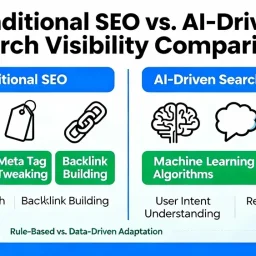
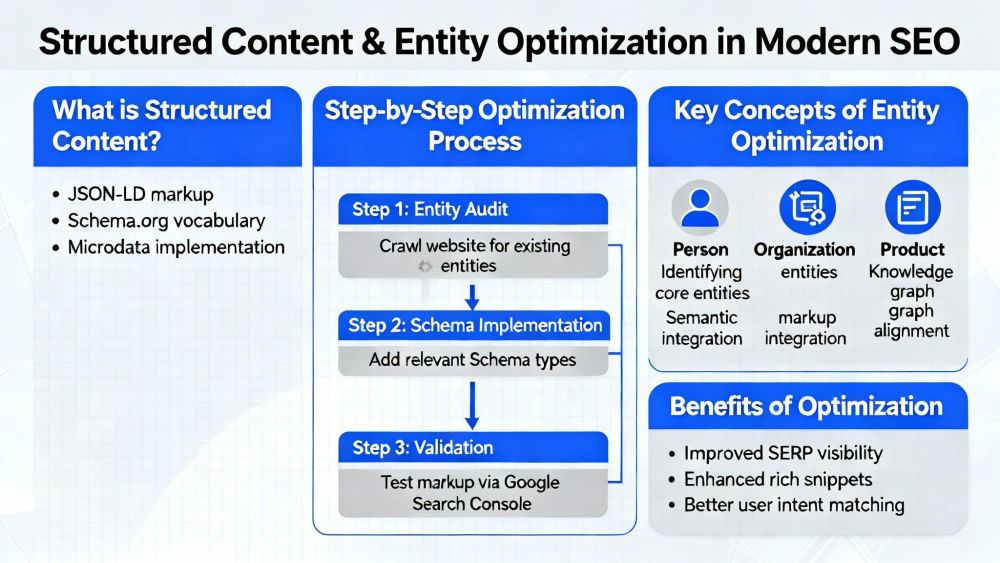
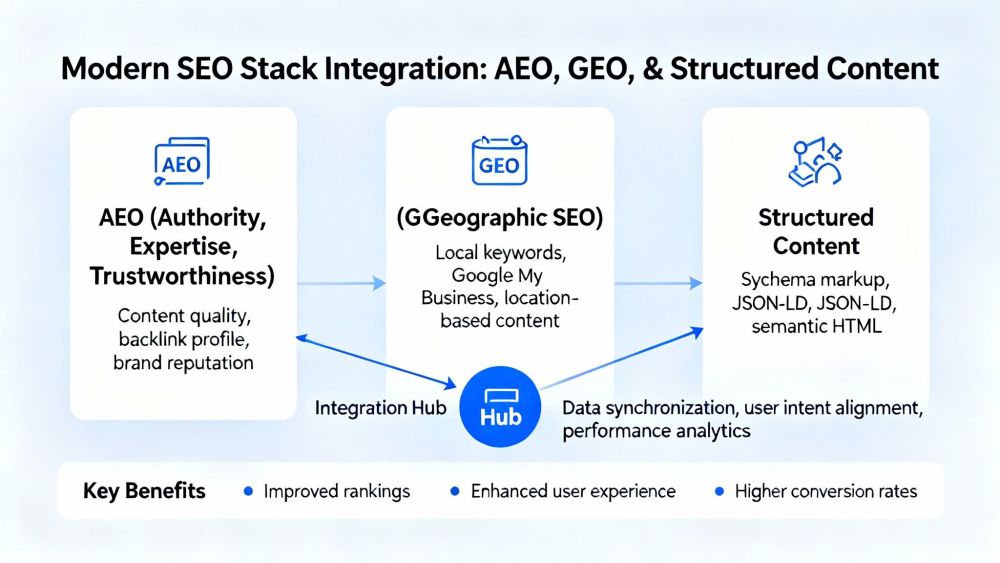
The transition from a keyword-centric to an entity-driven landscape marks a fundamental change for those relying on traditional SEO strategies. Today, answer engine optimization (AEO), generative engine optimization (GEO), structured content, entity-based SEO, and AI-driven search visibility form the core of a modern SEO stack.
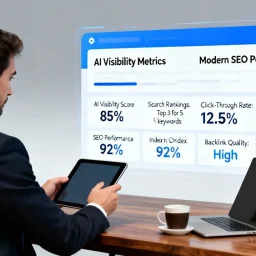
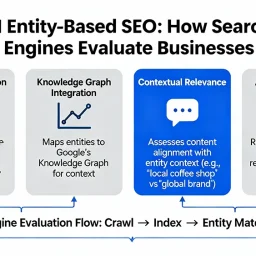
Modern search and discovery systems (like Google’s Search Generative Experience and AI-powered assistants) evaluate content not merely by individual keywords but by understanding entities, contextual relationships, and user intent. AI-powered engines parse structured data, grasp meaningful connections, and surface summarized answers, all based on a holistic interpretation of your web presence.
For businesses, this means the days of relying solely on keywords and basic optimization are over. Visibility now demands clear entity mapping, robust internal linking, schema markup, and strategically structured content that facilitates AI comprehension and builds trust.
Real-World Example
Consider a business that has long enjoyed strong rankings thanks to conventional SEO techniques. Suddenly, their organic visibility drops as AI-driven search and answer engines re-prioritize results. Instead of delivering a list of links based on keywords alone, these systems offer synthesized answers and highlight entities with robust authority citations and structured content signals.
By adopting a modern SEO stack—integrating AEO, GEO, and structured content architecture—the business pivots its strategy. It implements advanced schema, clarifies entity signals, restructures content around user intent, and fosters meaningful internal links. This repositioning enables the business to:
- Regain prominent placement in AI-powered search summaries and answer engines
- Improve lead quality by targeting high-value, intent-driven queries
- Maintain consistent discoverability across all major digital touchpoints

Common Mistakes
As the digital landscape shifts, many organizations continue to:
- Focus exclusively on keywords, neglecting entity clarity
- Ignore structured data and schema markup
- Overlook optimization for answer engines
- Maintain weak internal linking and siloed content
- Rely on outdated SEO tactics no longer recognized by AI search algorithms
These missteps result in poor visibility, missed opportunities for direct AI-sourced traffic, and diluted authority. Failing to evolve with the modern SEO stack can quickly erode even long-held search positions.
What You Should Aim For
Success in AI-first search environments hinges on:
- Clear entity signals: Explicitly defined entities that AI systems can easily recognize and rank
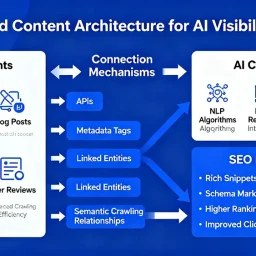
- Structured content architecture: Organized content clusters supported by robust schema markup
- Intent-aligned pathways: Seamless user journeys that address specific information needs and intent
- Strong semantic coverage: Comprehensive topical depth to signal authority and trustworthiness
- Visibility across search and answer engines: Presence not just in traditional search results, but also within AI-powered snippets and direct answers
The result? Strong AI and search visibility, clear entity recognition, improved authority signals, consistent discoverability—and a durable, future-ready SEO foundation.
Supporting Data & Research
Advances in machine learning and natural language processing drive the evolution toward AI-powered search experiences. Major platforms now interpret web pages based on semantic relationships, structured data, and the ability to deliver fast, authoritative answers to complex queries.
Research into search engine algorithms highlights the growing role of structured data (such as schema.org markup) and contextual understanding for both web search and answer engines. Content that provides unambiguous entity signals and intent alignment is far more likely to be surfaced by generative and answer-centric AI systems. Thorough topic coverage and comprehensive internal linking not only boost discovery but also reinforce your site’s credibility and trust.
Frequently Asked Questions
1. What is a modern SEO stack?
A modern SEO stack integrates answer engine optimization (AEO), generative engine optimization (GEO), structured content, entity-based SEO, and AI-driven strategies to maximize online visibility across search and answer platforms.
2. How does answer engine optimization (AEO) differ from traditional SEO?
AEO focuses on optimizing content to directly answer user questions in AI-powered answer boxes, snippets, and voice search—rather than simply boosting organic rankings for keywords.
3. Why is structured content important for AI search visibility?
Structured content enables AI search systems to understand, classify, and display your information with greater accuracy, increasing the chances of being featured in summarized answers.
4. What are content clusters and why do they matter?
Content clusters organize related topics around a central theme, strengthening authority and signaling interconnected expertise for both users and search engines.
5. How does entity SEO improve rankings?
Entity SEO clarifies the main people, places, organizations, and concepts represented on your site, enabling AI systems to better assess and rank your content.
6. What is generative engine optimization (GEO)?
GEO is the process of optimizing for search engines that use generative AI to synthesize and present answers, requiring clear, structured, and contextually relevant content.
7. How can local businesses benefit from a modern SEO stack?
Local businesses can enhance visibility in location-based queries, voice search, and AI-driven recommendations by focusing on structured data and robust local signals.
8. What is the role of schema markup?
Schema markup provides context and structure to your content, making it easier for AI and search engines to interpret and surface your pages in relevant answers.
9. How does internal linking contribute to AI search optimization?
Internal linking connects related content, clarifies context, and ensures search engines can easily navigate and understand your site’s topic relationships.
10. How do I get started with answer engine and generative optimization?
Begin with a technical audit, entity mapping, implementing structured schema, improving content architecture, and building intent-driven clusters supported by strong authority signals.
Webpuzzlemaster SEO Services
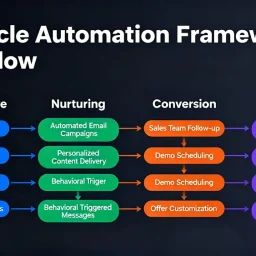
Webpuzzlemaster Digital Marketing Agency delivers AI Visibility strategies built on a modern SEO stack that integrates answer engine optimization, structured content, entity SEO, website performance optimization, CRM automation, and local visibility strategy. This integrated approach ensures businesses remain discoverable, authoritative, and competitive across both traditional search engines and AI-driven answer platforms.
Delivered by Webpuzzlemaster Digital Marketing Agency, led by Ruth Kuttler.
About the Author
Ruth Kuttler, AI Visibility Engineer™ and Digital Strategy Architect specializing in modern SEO stacks, AEO, structured content systems, and AI-driven visibility frameworks for growing businesses.
Your Next Step
Ready to future-proof your visibility with a modern SEO stack?