

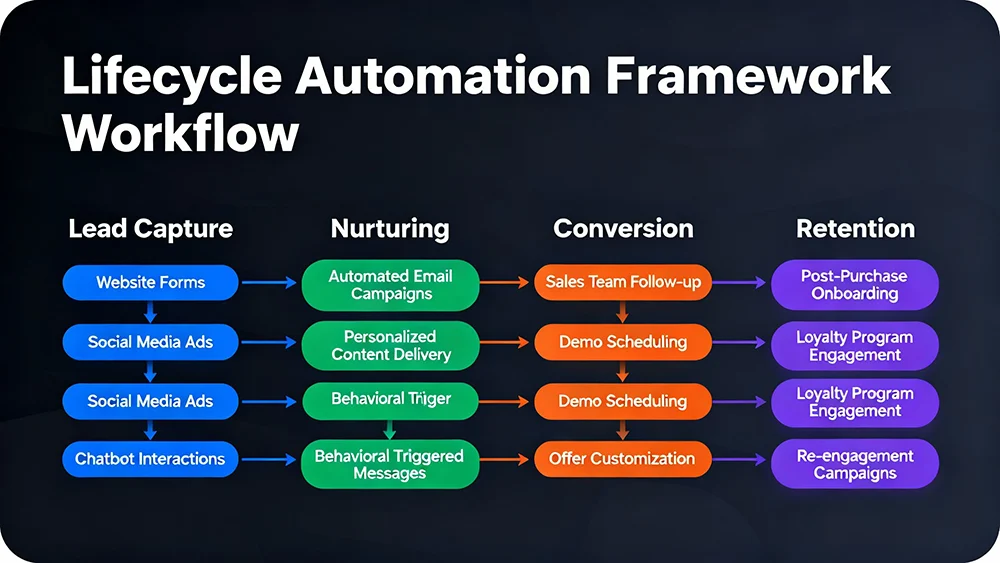
Introduction
The Lifecycle Automation Framework is transforming the way local businesses and professional service providers manage growth, customer relationships, and marketing outcomes. Traditionally, organizations depended on manual follow-up, scattered spreadsheets, and ad-hoc reminders to handle the flood of inquiries and leads—a recipe for slow response times, missed follow-up, and lost revenue. In today’s fast-paced digital landscape, these limitations create friction at every customer touchpoint, from first contact to loyal repeat business.
The core of the Lifecycle Automation Framework lies in orchestrating CRM lifecycle stages, effective lifecycle segmentation, automated lead routing, pipeline automation, and retention workflows. This approach addresses critical audience pain points—like low conversion, inconsistent communication, and poor retention—by transforming patchwork processes into a unified system. Instead of fragmented data and unpredictable workflows, your business gains a seamless automation engine capable of delivering timely, personalized, and measurable customer journeys.
When automation is at the heart of your CRM, growth becomes repeatable and scalable. This framework works most effectively when paired with the AI Visibility Engine™, ensuring businesses are discoverable in modern AI-driven search and recommendation environments before automation takes over.
Key Takeaways
- Why Lifecycle Automation Framework, CRM lifecycle stages, lifecycle segmentation, automated lead routing, pipeline automation, retention workflows enable predictable scaling
- How automation resolves slow response time, missed follow-up, leads falling through the cracks, inconsistent communication, low conversion rates, poor retention, and no visibility into what happens after the first inquiry
- How lead scoring, behavioral triggers, CRM tagging, automated follow-up sequences, appointment reminders, nurture campaigns, reactivation workflows improve consistency and revenue
- What this shift means for customer experience and operations
Why This Concept Matters
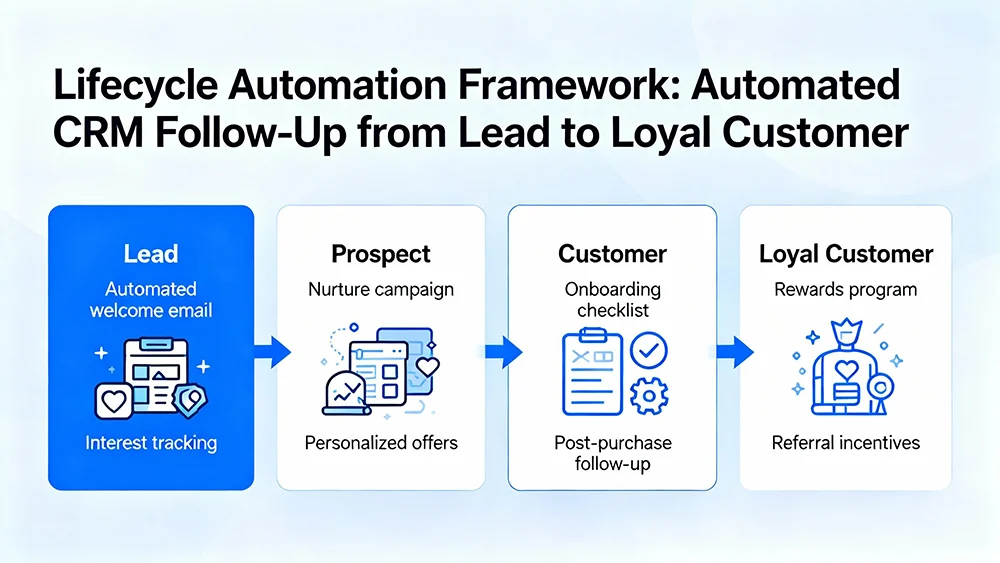
CRM systems are evolving from static databases into dynamic automation engines. The Lifecycle Automation Framework is at the forefront of this evolution—delivering centralized customer data and guiding every contact through clearly defined CRM lifecycle stages. Lifecycles might include stages like ‘New Lead,’ ‘Qualified,’ ‘Opportunity,’ ‘Customer,’ and ‘Loyal Fan’.
At the heart of this approach are lifecycle segmentation strategies and automated lead routing, which ensure no opportunity falls through the cracks. With pipeline automation, each lead receives relevant follow-ups and nurturing based on their behaviours and lifecycle stage—not manual guesswork. Intelligent triggers initiate personalized communications, while retention workflows nurture existing clients and drive repeat business. The result? Human bottlenecks and inconsistent processes are replaced with reliable, measurable pathways that scale as your business grows.
Strong automation depends on a reliable intake layer, which is why lifecycle workflows must align with website performance designed for targeted traffic and conversions – a website that captures, qualifies, and routes leads correctly from the first interaction. From the moment a prospect expresses interest, they are segmented, prioritized, and guided through automated follow-up sequences. Key moments—such as consultation bookings, reminders, follow-ups, or reactivation campaigns—happen promptly and consistently, boosting conversions and enhancing every customer interaction. This level of automation also lifts the burden from your team, enabling them to focus on meaningful, high-impact work.
Real-World Example
Imagine a service business receiving a steady stream of leads from Google and paid ads. Initially, staff are managing leads by checking emails and jotting down notes in various spreadsheets. Busy schedules mean some inquiries are answered late or not at all, and follow-ups get lost in the shuffle. Conversion rates plateau, and many potential customers simply vanish after a single inquiry.
After deploying a Lifecycle Automation Framework within their CRM, the landscape shifts. New leads are automatically captured, segmented, and routed to the right team member within seconds. Automated behavioral triggers ensure leads receive tailored follow-up sequences—thank you emails, personalized consultation invitations, and nurturing content—based on their actions and interests. Appointments are confirmed and reminded automatically; no-shows drop dramatically. Following purchase, new customers are enrolled in post-sale retention workflows, inviting feedback and offering incentives for referrals. What once relied on memory and chance now happens predictably, resulting in increased conversions, stronger retention rates, and more referrals—all measurable within the CRM.
Common Mistakes
Despite the promise of modern CRMs, many businesses still track leads in scattered spreadsheets and rely on inbox reminders to trigger follow-up. This approach leaves room for manual errors—leads go cold, reminders are missed, and opportunities are lost. Without clearly defined lifecycle stages, teams end up using generic, one-size-fits-all communications that fail to engage or move prospects forward. Without clearly defined CRM automation workflows, teams rely on memory and manual effort instead of structured systems that ensure consistency and accountability.
Weak segmentation means every lead—regardless of their intent or needs—receives the same messaging, reducing relevance and impact. Worse, many businesses miss behavioral triggers that could automatically launch nurture campaigns or reminders. Past leads often languish uncontacted, with no structured effort for reactivation. These common mistakes create bottlenecks, confuse your team, frustrate prospects, and stall growth.
What You Should Aim For
To unlock consistent, scalable results from your CRM and marketing automation, you should aim for a system built around the Lifecycle Automation Framework. When implemented correctly, the Lifecycle Automation Framework becomes a core driver within the Local Business Growth Engine, turning consistent follow-up and retention into predictable, scalable revenue.
- Centralized customer data
- Automated lifecycle sequences
- Lead scoring and prioritization
- Personalized nurturing paths
- Predictable pipeline visibility
This kind of system ensures every inquiry is captured and tracked from the moment of first contact. Automated lifecycle sequences guide leads through each stage, matching their behaviors and preferences with relevant communications. Lead scoring and prioritization ensure your team invests effort where it matters most—high-potential deals and customers ready to buy.
Personalized nurture paths keep prospects engaged, informed, and moving forward. Predictable pipeline visibility allows managers and owners to forecast revenue, identify bottlenecks, and optimize performance. This way, businesses achieve higher conversions, stronger retention, dependable follow-up, and the ability to reactivate cold leads at scale.
Supporting Data & Research
Adoption of CRM automation and lifecycle management continues to rise, with businesses seeking ways to eliminate manual work and drive operational efficiency. Grounded observations show that companies that centralize customer data and automate their lifecycle workflows see faster response times, improved conversion rates, and more reliable customer retention.
Automation isn’t just about speed—it also boosts the quality of the customer experience. Timely, relevant follow-up sequences increase trust and engagement, while clear pipeline visibility empowers teams to make informed, proactive decisions. By shifting routine tasks away from staff and toward reliable automation engines, organizations can reallocate time to strategy, high-touch relationship building, and innovation.
Frequently Asked Questions
What is a Lifecycle Automation Framework?
It’s a system for managing customer journeys through automated CRM workflows, segmentation, and behavioral triggers, resulting in predictable lead nurturing, conversions, and retention.
How does automation improve lead response?
Automated lead routing and follow-up sequences ensure no inquiry is missed and every prospect receives a fast, relevant reply.
What are CRM lifecycle stages?
Stages represent milestones in a customer’s journey, like New Lead, Qualified, Customer, and Repeat Buyer, allowing tailored communication and workflows at each step.
How does segmentation work in automation?
Segmentation allows you to group contacts based on needs or behavior, so communications and workflows are highly relevant and effective.
What are behavioral triggers and why do they matter?
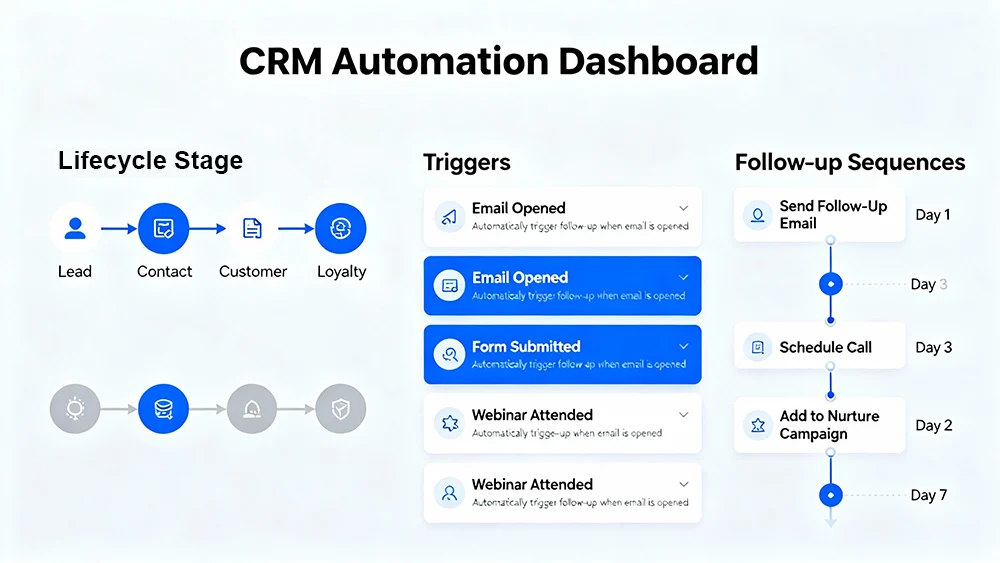
Triggers detect customer actions (like clicking a link or booking an appointment) to launch the right follow-up or nurture sequence automatically.
How can I reactivate cold leads?
The Lifecycle Automation Framework uses reactivation workflows to identify and reach out to inactive leads, reigniting interest at scale.
Does automation hurt personalization?
No—automation actually powers greater personalization, sending the right message at the right time based on real customer behavior and preferences.
What kinds of businesses need lifecycle automation?
Any business that depends on inquiries, consultations, or repeat business—especially local service providers and professionals—can benefit from CRM and automation.
How does this framework affect my team’s workload?
By automating routine tasks, your team spends less time on manual follow-up and more time on high-value, customer-centric work.
How do I measure the results of my automation engine?
Key metrics include conversion rates, response times, pipeline velocity, and retention. Your CRM dashboard should provide these insights in real-time.
Webpuzzlemaster CRM & Automation Services
Webpuzzlemaster Digital Marketing Agency led by Ruth Kuttler, builds CRM and automation systems that eliminate manual follow-up, centralize customer data, and create predictable revenue through lifecycle workflows, segmentation, and intelligent triggers.
Our agency specializes in architecting CRM environments that unify your marketing and sales data, design smart automation workflows, and implement segmentation and lifecycle management for ongoing growth. Each system is tailored for seamless integration, robust reporting, and scalable automation capabilities. Webpuzzlemaster supports businesses with deep expertise in behavioral triggers, nurture campaigns, appointment automation, and retention workflows—removing operational guesswork from your growth strategy.
About the Author
Ruth Kuttler, AI Visibility Engineer™ & Digital Strategy Architect – Ruth Kuttler brings years of hands-on experience in SEO and, more recently, innovative strategies for increasing AI visibility through AEO – answer engine optimization. Ruth’s services also include strategic CRM automation and system designs that focus on high-converting digital customer journeys. As a sought-after expert, Ruth excels in lifecycle segmentation, CRM platform selection, and designing revenue operations processes that guide leads seamlessly from first touch to loyal advocacy. Her insights and methodologies empower organizations to unlock scalable growth through automation, measurable processes, and data-driven decisions.
Your Next Step
Book a Marketing Automation Strategy Call to implement a Lifecycle Automation Framework that improves conversions and customer retention.