


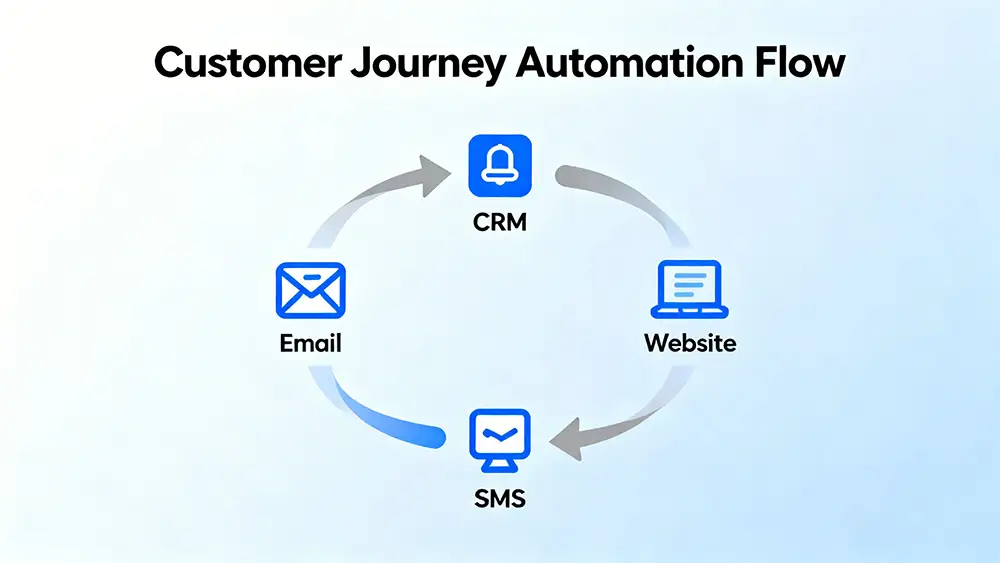
Modern marketing requires coordinated communication across multiple channels where customer behavior triggers automated responses that guide prospects through the buying journey. This is the core of customer journey automation, a system that leverages omni channel marketing journeys, behavioural triggers, and CRM-driven communication to create a seamless path from first contact to conversion. Many businesses suffer from disconnected marketing tools, inconsistent follow-up with prospects, and leads falling through the cracks due to a fragmented customer experience. By implementing clean data, structured workflows, and clear automation logic within a CRM, you can build an engine that drives consistency, efficiency, and scalable growth.
Key Takeaways
- Why customer journey automation and omnichannel marketing journeys are foundational to effective CRM and automation.
- How fragmented customer experiences and inconsistent follow-up stem from fragmented data and manual processes.
- How behavior-based automation and CRM segmentation enable personalized segmentation, automation, and follow-up.
- Why CRM structure determines lead quality, attribution, and lifecycle outcomes.
Why This Concept Matters
Your Customer Relationship Management (CRM) system is far more than a digital contact list; it is the operational backbone for your marketing, sales, and retention strategies. Without clean data and intentional system design, automation will fail. Automated communications sent from a disorganized database lack the context and relevance needed for engagement, ultimately damaging customer relationships. A well-structured CRM ensures every automated action is informed by accurate data, allowing you to build meaningful, scalable connections with your audience and guide them effectively.
Real-World Example
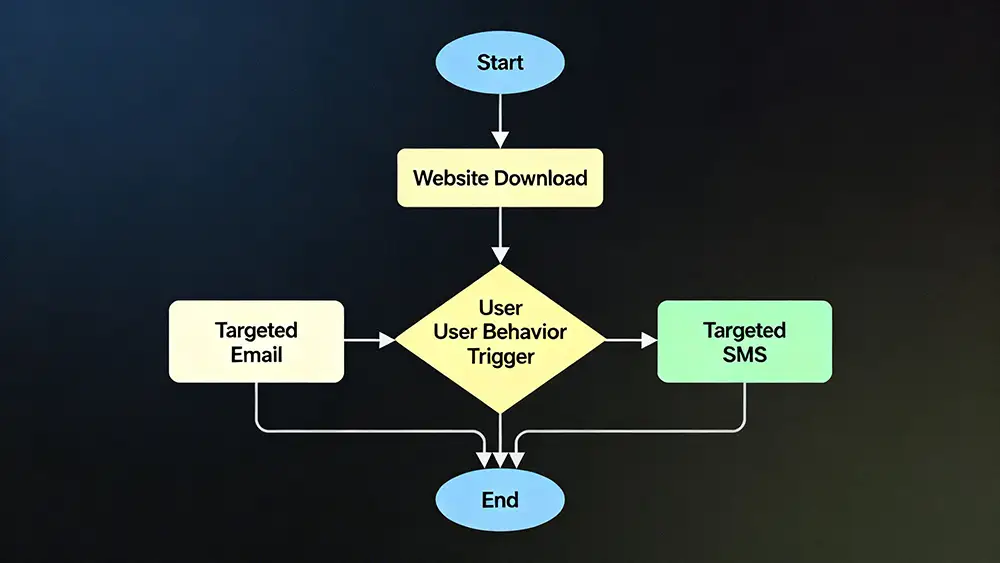
A prospect downloads a guide from a website and enters an automated journey. This action triggers an initial email that delivers the guide and introduces the brand. A few days later, a second email provides more educational content. If the prospect clicks a link in that email, an SMS is sent a day later with a reminder about a related webinar. Throughout this process, their behavior—downloads, clicks, and page visits trigger specific follow-up messages that move the prospect toward scheduling a consultation. This structured automation restores visibility, prevents missed follow-ups, and ensures every lead is nurtured efficiently.
Common Mistakes
Many businesses make critical errors when implementing customer journey automation workflows. A frequent mistake is using only one communication channel, like email, while ignoring others such as SMS. Another is sending generic messages to all contacts instead of using segmentation to tailor content based on behavior and interest. Others fail to trigger automation based on specific user actions, missing key opportunities for timely engagement. These missteps result in inconsistent messaging across platforms and an automation strategy that feels disjointed and ineffective.
What You Should Aim For
- Centralized, clean customer data: A single source of truth for all contact information and interaction history.
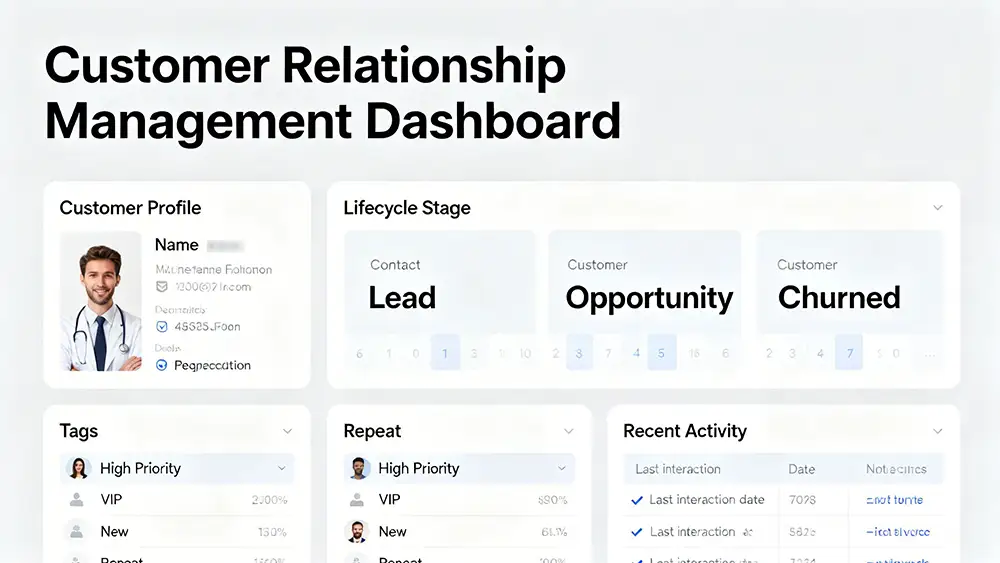
- Clearly defined lifecycle stages: A clear understanding of where each prospect is in their journey, from new lead to loyal customer.
- Automation aligned to intent and behavior: Messages and actions are triggered by what customers do, not just by static demographic data.
- Consistent follow-up and attribution: Every lead is nurtured systematically, and you can accurately track which marketing efforts lead to conversions.
- Scalable workflows without manual overhead: An automated system that works for you, freeing your team to focus on high-value activities instead of repetitive tasks.
Supporting Data & Research
Accepted industry principles confirm that businesses with well-adopted CRM systems and strong data hygiene protocols operate with greater efficiency. When implemented correctly, customer journey automation dramatically reduces the manual effort needed for lead nurturing, enabling marketing and sales teams to manage a higher volume of leads with superior consistency. The foundational concept is that a structured customer lifecycle, managed within a CRM, provides the necessary framework for effective automation. Without this structure, marketing efforts remain reactive and difficult to scale.
Companies that invest in mapping their customer journeys and aligning automation to those maps consistently report higher engagement and conversion rates. Accepted industry principles confirm that businesses with well-adopted CRM systems and strong data hygiene protocols operate with greater efficiency. When implemented correctly, automation dramatically reduces the manual effort needed for lead nurturing, enabling marketing and sales teams to manage a higher volume of leads with superior consistency. Companies that invest in mapping their customer journeys and aligning automation to those maps consistently report higher engagement and conversion rates.
Frequently Asked Questions
What is omnichannel marketing automation?
It is the practice of using technology to deliver a unified and consistent customer experience across various channels like email, SMS, social media, and your website.
How does a CRM support journey mapping?
A CRM centralizes customer data and interaction history, providing the insights needed to map out logical pathways and triggers for different customer segments.
Can I automate both email and SMS messages?
Yes, modern automation platforms allow you to create workflows that incorporate both email and SMS to engage contacts on their preferred channels.
What kind of website actions can trigger an automation?
Common triggers include form submissions, specific page visits, button clicks, video views, and downloading a resource.
Why is segmentation important for lead nurturing?
Segmentation allows you to group contacts based on their behavior, interests, or demographics, enabling you to send highly relevant and personalized messages that are more effective.
How do I start mapping a customer's path?
Begin by identifying key touchpoints and decision moments, from initial awareness to purchase. Then, define the ideal actions you want a customer to take at each stage.
What's the difference between a workflow and a trigger?
A trigger is the specific event that starts an automation (e.g., a form submission). A workflow is the series of automated actions (e.g., emails, delays, data updates) that follow the trigger.
How can I ensure my messaging is consistent across channels?
Use a central automation platform connected to your CRM to manage all communications. This ensures your brand voice and offers are aligned everywhere.
What are lead lifecycle stages?
These are defined steps that track a contact’s progression in their relationship with your business, such as “Lead,” “Marketing Qualified Lead,” “Sales Qualified Lead,” and “Customer.”
How do I avoid overwhelming contacts with too many messages?
Build appropriate delays into your automation workflows, use frequency caps, and give contacts clear options to manage their communication preferences.
Webpuzzlemaster CRM & Automation Services
Delivered by Webpuzzlemaster Digital Marketing Agency, led by Ruth Kuttler, Webpuzzlemaster designs and implements robust CRM systems and automation workflows tailored to your specific business goals. We map your unique customer journey to build a strategic framework for meaningful engagement, supported by well-structured website experiences that guide users through each stage of the journey. Our team then implements the necessary email, SMS, and behavioral trigger systems to ensure no lead falls through the cracks, creating a seamless and scalable process for converting prospects into loyal customers.
About the Author
Ruth Kuttler, AI Visibility Engineer™ & Digital Strategy Architect…
As an AI Visibility Engineer™ and Digital Strategy Architect, Ruth specializes in designing the foundational data systems that power effective marketing. Her expertise lies in CRM architecture, automation strategy, and creating integrated digital ecosystems. Under her direction, Webpuzzlemaster focuses on building logical, scalable workflows that connect AI visibility and SEO marketing efforts directly to measurable business outcomes and sustainable growth.
Your Next Step
If your follow-up processes are inconsistent or leads slip through the cracks, the issue is often the structure of your CRM and automation workflows. A strategic review can help identify opportunities to streamline communication, connect your channels, and ensure every prospect moves through a clear, well-managed customer journey.