

Introduction
Website performance isn’t just a technical box to tick—it’s a critical driver of leads, engagement, and revenue for local businesses, professionals, and retailers. When we talk about core web vitals mastery, we mean excelling at the essential signals Google and your visitors use to judge quality: fast load times, seamless mobile UX, consistent structure, and reliable technical health. If your site is slow, hard to navigate, or suffers erratic behavior on mobile, it becomes an instant conversion killer—turning away search traffic, wasting ad spend, and eroding customer trust. In today’s local business landscape, mastery of website performance optimization isn’t optional. It’s the linchpin of modern page experience signals, especially given the mobile-first nature of search and consumer expectations.
For business owners and marketers dealing with slow websites, poor mobile usability, high bounce rates, and declining conversions, understanding and addressing core web vitals can be the difference between mediocre results and sustainable growth. Let’s dig in to see why these factors matter, and how to make them work for you.
Key Takeaways
- Why Core Web Vitals mastery, page speed optimization, mobile-first UX, and technical SEO underpin all digital marketing
- How performance issues amplify slow-loading pages, poor mobile usability, wasted ad budgets, and declining conversion rates
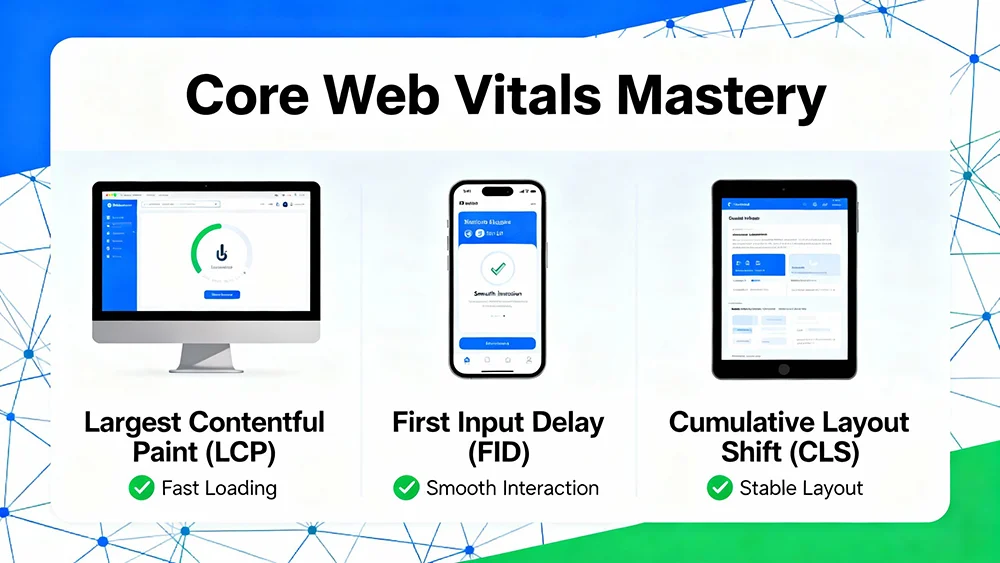
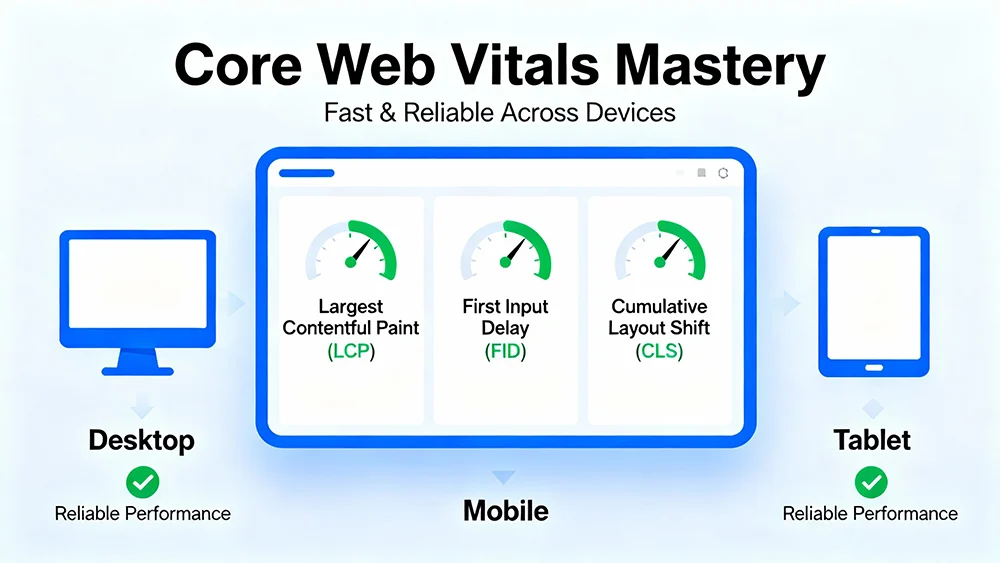
- How Largest Contentful Paint (LCP), Interaction to Next Paint (INP), Cumulative Layout Shift (CLS), performance monitoring, and conversion-focused UX improve engagement and conversions
- What this means for SEO, ads, and overall business growth
Why This Concept Matters
Core web vitals mastery means getting serious about metrics that directly impact user experience and Google rankings: load speed, visual stability, and responsiveness. When these aren’t prioritized, you waste valuable traffic, see higher bounce rates, and diminish trust—even if you spend big on SEO or ads. Every slow page and every jarring mobile moment drains ROI, lowering lead quality and sabotaging your local business growth strategy.
On the flip side, high-performing websites compound your marketing returns. A fast, stable site keeps leads engaged, increases time on site, and drives more meaningful interactions. It also plays a direct role in technical SEO performance and supports the AI visibility engine discovery, boosting your search rankings and getting your business seen by more qualified leads. It’s not just about speed—it’s about reliability, structure, and the seamless experience users and algorithms demand. High-performing websites also support the AI Visibility Engine™, ensuring your business is eligible for AI-driven discovery, recommendations, and next-generation search results.
Real-World Example
Imagine a local service business investing heavily in SEO and paid ads. Despite plenty of traffic, they see high bounce rates and low lead conversions, especially from mobile. Digging into analytics reveals slow mobile load times, unresponsive menus, and erratic page layouts. Prospects abandon the site before even seeing the offer.
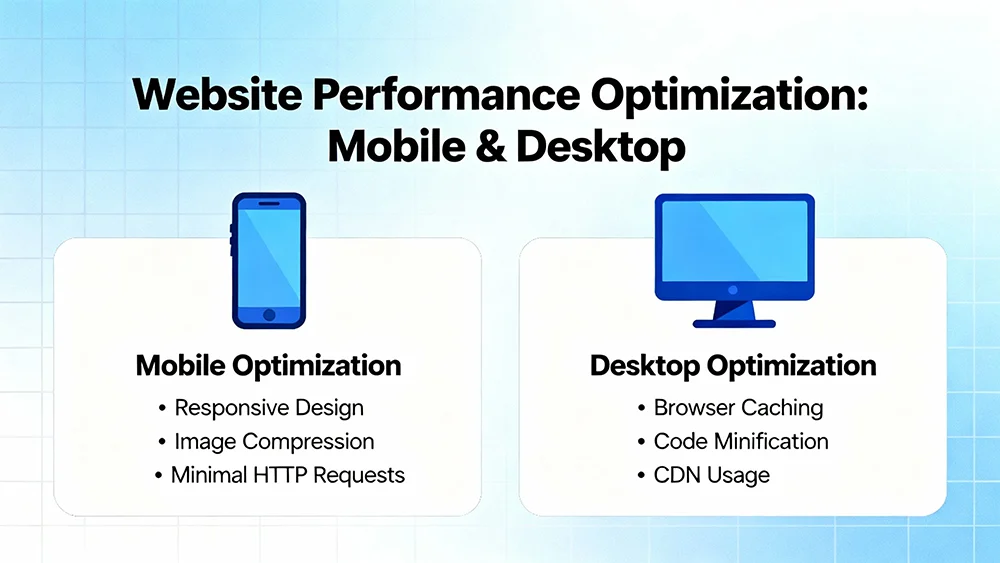
After focusing on core web vitals mastery—optimizing server response times, compressing images, streamlining code, and improving mobile UX—website performance optimization transforms the experience. The site now loads in under 2 seconds, remains visually stable as content loads, and menus work flawlessly on all devices. As a result, bounce rates plummet and high-quality conversions increase, with the business finally seeing ROI from their local business growth strategy and digital ads.
Common Mistakes
Many local businesses fall prey to common website performance blunders:
- Using bloated themes: Heavy, all-in-one themes may look attractive but are often riddled with extra scripts and unused features that slow down load times and frustrate users.
- Ignoring mobile performance: Failing to optimize for mobile means alienating the majority of search traffic and missing out on mobile-first index benefits.
- Unoptimized images and scripts: Large, uncompressed assets hinder load speed. Inline scripts can block rendering and cause key content delays.
- Poor hosting environments: Cheap or shared hosting can slow response times and limit scalability, especially under traffic spikes from successful campaigns or seasonal rushes.
- Prioritizing design aesthetics over measurable performance: A beautiful website is wasted if users can’t access or interact with it quickly and reliably.
Each of these mistakes not only sabotages your core web vitals but amplifies your audience’s pain points, undercutting even the best content or offers.
What You Should Aim For
To achieve genuine website performance optimization, aim for:
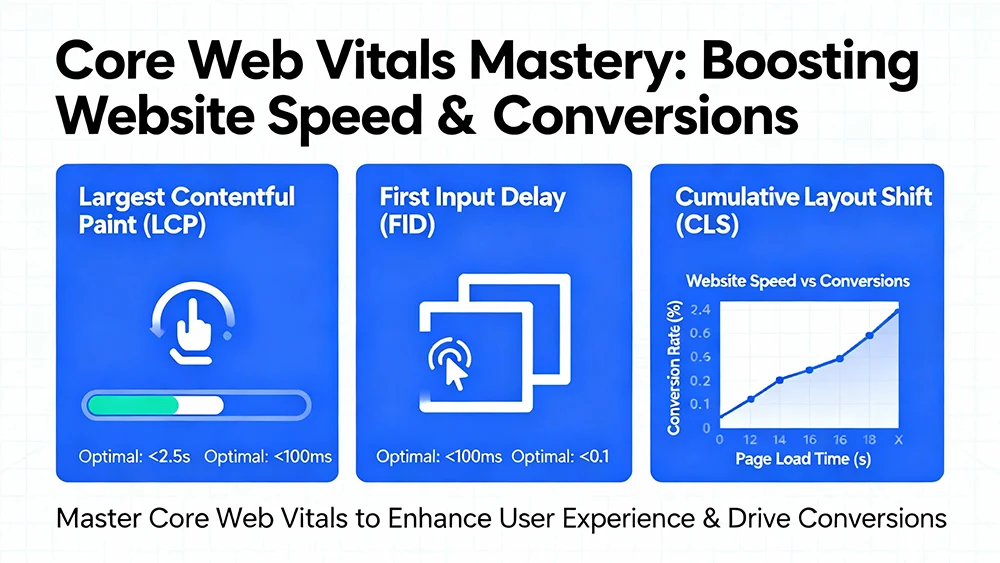
- Fast, stable page loads (especially on mobile): Under 2.5 seconds for key content, no matter the device or network quality.
- Mobile-first usability: Responsive designs, touch-friendly navigation, and clear calls-to-action that make converting easy from any device.
- Clear structure and navigation: Logical, simple layouts enable users (and search engines) to find what they need without confusion. Integrate structured data optimization for enhanced discoverability.
- Strong calls to action: Smart placement of forms, buttons, and contact points drives more qualified conversions.
- Reliable tracking and measurement: Robust analytics to monitor conversion metrics, track Core Web Vitals, and fuel continuous improvement. Tightly integrate CRM automation workflows for better lead management.
When paired with CRM automation workflows, performance-optimized websites ensure leads are captured, routed, and followed up without friction or data loss.
Supporting Data & Research
The impact of core web vitals mastery is well-documented. Google’s ongoing algorithm updates increasingly reward websites that demonstrate strong performance in Largest Contentful Paint (LCP), Interaction to Next Paint (INP), and Cumulative Layout Shift (CLS). This isn’t just theoretical—real-world data shows that faster sites receive longer sessions, higher engagement rates, and dramatically improved conversion-focused website design outcomes. Furthermore, mobile-first performance is now table stakes. Studies repeatedly show that even a 1-second delay in mobile load time can result in significant increases in bounce rate and decreases in conversions.
Technical website health also influences AI discovery—modern AI-driven search results rely on well-structured, high-performing sites for indexing and inclusion in next-generation search displays. If your site is slow or unstable, you’re missing out on both traditional and AI search visibility. This performance foundation ultimately feeds the Local Business Growth Engine, allowing SEO, ads, and automation efforts to scale without being undermined by slow or unstable website experiences.
Frequently Asked Questions
What are Core Web Vitals and why do they matter?
Core Web Vitals are performance metrics that measure loading speed, interactivity, and visual stability. They matter because Google uses them as ranking signals and users are far more likely to engage and convert on fast, stable websites.
How do Core Web Vitals impact lead quality?
Strong Core Web Vitals reduce bounce rates and friction, attracting visitors who are more intentional and ready to convert. This results in higher-quality leads rather than casual or accidental traffic.
Can improving Core Web Vitals increase conversions?
Yes. Faster load times and smoother interactions make it easier for users to complete forms, make calls, or take next steps without frustration or delay.
Are Core Web Vitals more important on mobile devices?
Absolutely. Google primarily evaluates performance using mobile data, and most local searches happen on mobile devices where speed and usability are critical.
Do Core Web Vitals affect SEO rankings?
Core Web Vitals are part of Google’s page experience signals. While they are not the only ranking factor, poor scores can limit visibility even when content is strong.
What tools measure Core Web Vitals?
Google PageSpeed Insights, Google Search Console, Lighthouse, and Chrome User Experience Reports are commonly used to assess both lab and real-user performance data.
Can WordPress sites achieve excellent Core Web Vitals scores?
Yes. With proper hosting, optimized themes, clean code, image compression, and performance-focused configuration, WordPress sites can perform extremely well.
Is it better to optimize performance or redesign a site?
In many cases, performance optimization delivers major gains without a full redesign. A rebuild is only necessary when the site’s structure or UX is fundamentally broken.
How quickly do results appear after optimization?
Performance improvements are often immediate, while SEO and conversion gains typically follow over several weeks as engagement signals improve.
When is a full website rebuild necessary?
A rebuild is recommended when a site has outdated architecture, severe technical debt, or UX issues that optimization alone cannot resolve.
Webpuzzlemaster Website Performance & Conversion Services
Core Web Vitals mastery is a foundational component of the Website Performance & Conversion Engine, where speed, stability, and usability directly influence lead quality and conversion outcomes. Webpuzzlemaster Digital Marketing Agency helps businesses turn website traffic into measurable growth by combining performance engineering, conversion-focused UX, and AI-aligned technical foundations.
Our team, led by Ruth Kuttler, specializes in high-performance WordPress development, Core Web Vitals optimization, technical SEO, and data-driven UX improvements that directly impact lead quality and ROI. Every website is treated as a revenue system—not a brochure—ensuring speed, structure, and usability work together to support SEO, paid traffic, and long-term scalability.
About the Author
Written by Ruth Kuttler, AI Visibility Engineer™ & Digital Strategy Architect specializing in high-performance WordPress, Core Web Vitals optimization, UX-driven conversions, and AI-aligned website architecture.
Your Next Step
Get Your Website Speed & Core Web Vitals Optimization Plan
Discover exactly what’s slowing down your site and how targeted performance fixes can improve lead quality and conversions.