

Introduction
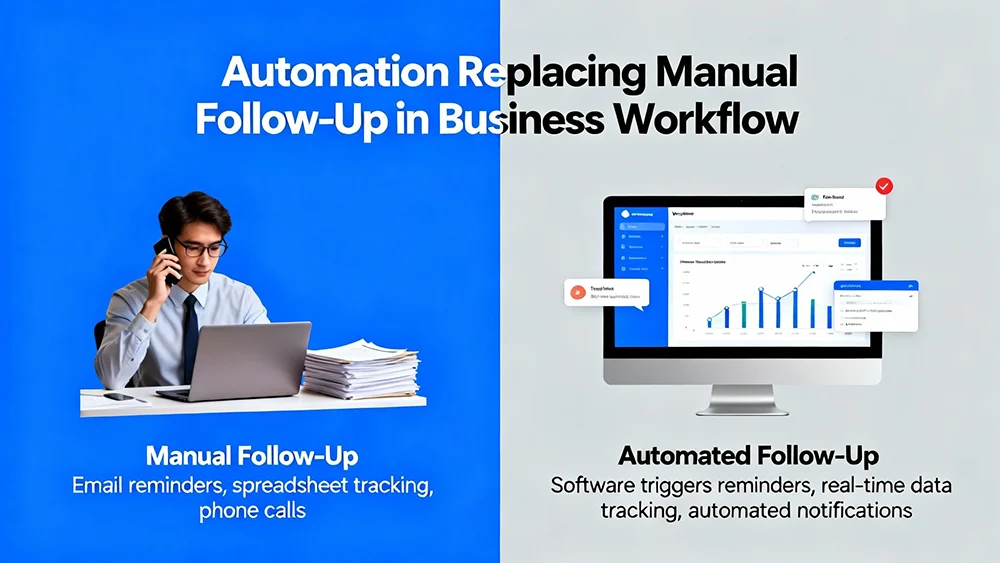
For local businesses, professional service providers, healthcare practices, retailers, and regional companies, the hidden cost of manual follow-up is one of the biggest obstacles to predictable growth. Relying on spreadsheets, staff memory, or generic message blasts not only saps productivity but also guarantees many opportunities slip through the cracks. Key CRM workflows like automated follow-up, lifecycle automation, segmentation, and personalized messaging are vital because they directly address missed leads, delayed responses, and inconsistent communication—the very issues that stifle revenue.
With centralized data management and automation, businesses stop chasing patchwork solutions. Instead, teams can nurture every lead or customer reliably, without depending on manual tracking that creates errors and fragments your customer’s experience. As a CRM & Automation strategist, I’ve seen firsthand how automation transforms the pipeline from unpredictable and unmanageable to proactive, scalable, and efficient.
Key Takeaways
- Why lifecycle automation, CRM workflows, automated follow-up, segmentation, personalized messaging, and centralized data management drive predictable scaling
- How automation solves missed leads, delayed responses, inconsistent communication, lost revenue opportunities, manual tracking errors, uand npredictable pipeline performance
- How lead nurturing sequences, automated task reminders, structured content alignment, website performance optimization, AI-assisted messaging, pipeline visibility, local visibility signals, and reputation management systems improve consistency and revenue
- What this shift means for experience and operations
Why This Concept Matters
The hidden cost of manual follow-up goes far beyond wasted hours. When leads and clients are tracked only with inconsistent spreadsheets or sticky notes, essential tasks fall through the cracks. CRM workflows, lifecycle automation, and automated follow-up ensure no interaction is forgotten, each customer is nurtured at the right time, and segmentations allow highly relevant communication.
In today’s business landscape, success is built on:
- Centralized data, so teams always work from the most up-to-date information
- Lifecycle workflows, ensuring seamless movement from lead to loyal customer
- Segmentation, to deliver precisely-targeted messages
- Personalized messaging, which builds relationships rather than producing generic touches
- Intelligent triggers, so follow-up happens automatically based on real customer actions
When these core CRM concepts are missing, companies find themselves stuck re-entering information, playing catch-up, and missing profit-driving opportunities. Implementing lifecycle automation with truly automated follow-up sequences lifts your team from firefighting and lets you architect a proactive, scalable growth engine.

Real-World Example
Consider a local business that used manual spreadsheets to track prospects. Staff would jot down leads after calls, but with no workflow, callbacks were delayed or missed entirely. Important follow-ups depended on staff memory. Leads grew cold, and the company couldn’t identify its best sources or bottlenecks.
After adopting CRM workflows, lifecycle automation, and automated reminders, every lead was instantly assigned an owner and follow-up sequence. Personalized emails went out automatically, and tasks appeared on each staff member’s dashboard. Segmentation enabled more relevant offers, while centralized data allowed management to spot trends in real-time. As a result, response times dropped, conversions rose, and the business gained clarity into its sales pipeline that it never had before.
Common Mistakes
Many businesses fall into predictable traps that increase the hidden cost of manual follow-up:
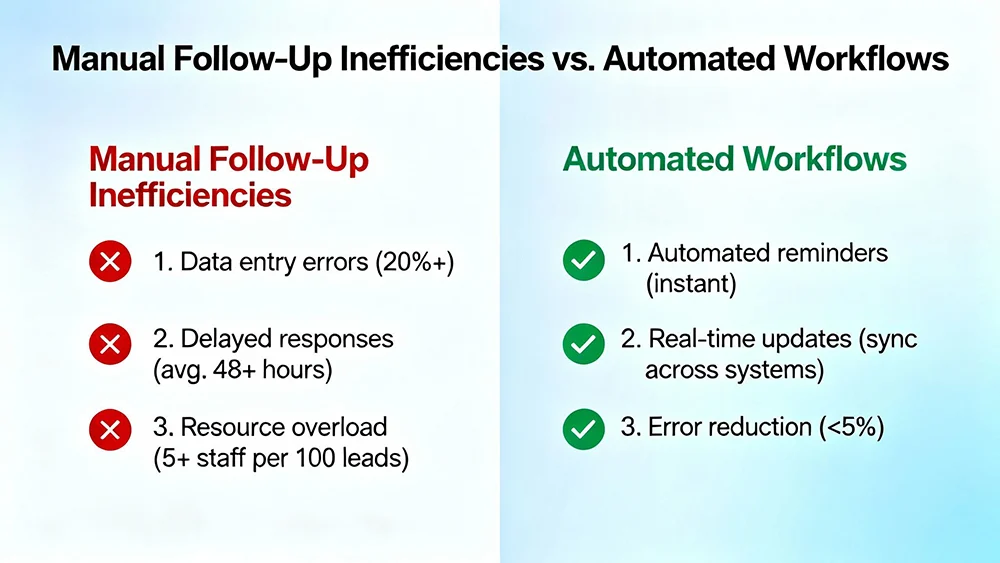
- Using spreadsheets to manage leads, introducing errors and fragmentation
- Relying entirely on staff memory for follow-up inevitably results in dropped balls
- Sending generic messages that don’t match a lead’s needs or timing
- Inconsistent nurturing—some leads get all the attention, others are ignored
- Ignoring segmentation results in one-size-fits-all communications
- Failing to automate reminders or renewals, causing lost repeat business
These common mistakes compound over time, leading to missed revenue, frustrated staff, and unpredictable pipelines that hinder strategic planning.
What You Should Aim For
To truly eliminate the hidden cost of manual follow-up, businesses need systems designed for:
- Faster response times: Automated alerts and task assignments mean no lead is left waiting.
- Consistent nurturing: Lifecycle-driven, personalized messages ensure every customer receives the attention they deserve.
- Higher conversions: Structured workflows prevent drop-offs, so more prospects become customers.
- Accurate forecasting: Centralized tracking and reporting give total pipeline visibility, supporting decision-making.
- Fewer missed opportunities: Automated reminders for renewals, upsells, and post-sale engagement catch what manual methods miss.
- Scalable customer journey workflows: As you add more leads and clients, automation keeps experiences smooth, without hiring more staff exponentially.
These desired outcomes are only possible when you move from manual to automated follow-up sequences, with CRM workflows tightly integrated with website performance optimization, structured content architecture, local business visibility tactics, and reputation management systems.

Supporting Data & Research
Industry research confirms that businesses embracing lifecycle automation and CRM workflows see substantial improvements in lead engagement, response times, and operational efficiency. According to multiple studies:
- Automated follow-up increases response rates and keeps leads warmer compared to manual, ad hoc responses.
- Companies with centralized CRM data report less time spent on duplicate entry and significantly fewer missed tasks.
- Automated segmentation and nurture sequences deliver more relevant messages, directly lifting conversion rates and customer satisfaction.
- Operational costs drop as workflows are streamlined, freeing teams to focus on high-value activities.
This data reinforces that eliminating manual follow-up isn’t just about saving time—it’s about building a scalable, resilient business foundation.
Frequently Asked Questions
Why is manual follow-up such a problem?
Manual follow-up leads to mistakes, missed leads, inconsistent communication, and lost revenue, especially as your business grows.
What are the biggest hidden costs of manual follow-up?
Lost opportunities, wasted staff time, errors in tracking, and unpredictable pipeline health all become expensive over time.
How does CRM automation help with lead nurturing?
Automated workflows and personalized sequences ensure every lead gets timely, relevant touches, increasing conversions.
What is segmentation and why does it matter?
Segmentation targets communication based on lead type or behavior, delivering higher engagement and more sales.
Can I forecast pipeline performance better with automation?
Yes. Automation provides accurate, real-time tracking so you always know what’s coming in your pipeline.
Are automated reminders really more effective than manual tracking?
Absolutely. Automation is consistent and never forgets, so near-zero callbacks or renewals are missed.
Will automation make communication less personal?
Not when configured properly. Automation actually enables MORE personalized responses at scale, using targeted messaging.
How are CRM workflows integrated with website optimization?
With systems working together, every new web lead goes directly into appropriate nurture workflows and reporting.
How does automation improve reputation management?
Automated requests for reviews and feedback ensure satisfaction isn’t left to chance, creating steady social proof.
What should I look for in CRM automation tools?
Seek out options with strong lifecycle automation, segmentation, reporting, and flexible integrations with existing systems.
Webpuzzlemaster CRM & Automation Services
Webpuzzlemaster Digital Marketing Agency, led by Ruth Kuttler, helps businesses eliminate the hidden costs of manual follow-up though CRM workflows, lifecycle automation, automated follow-up sequences, structured content alignment, website performance optimization, AI-powered messaging, local visibility strategy, and reputation management systems.
These integrated solutions replace fragmented tools and manual processes with centralized data, intelligent triggers, and scalable workflows. The result is predictable engagement, higher conversion rates, reduced operational waste, and a pipeline that supports sustainable growth instead of constant firefighting.
About the Author
Ruth Kuttler, AI Visibility Engineer™ & Digital Strategy Architect is a specialist in CRM architecture, lifecycle automation, and intelligent system design that connects marketing, sales, and operations into measurable, scalable growth engines for local and national businesses.
Your Next Step
Ready to eliminate missed leads, delayed responses, and inconsistent follow-up?
Book a strategic automation consultation to uncover where manual processes are costing you revenue—and how intelligent CRM and lifecycle automation can resolve it.