

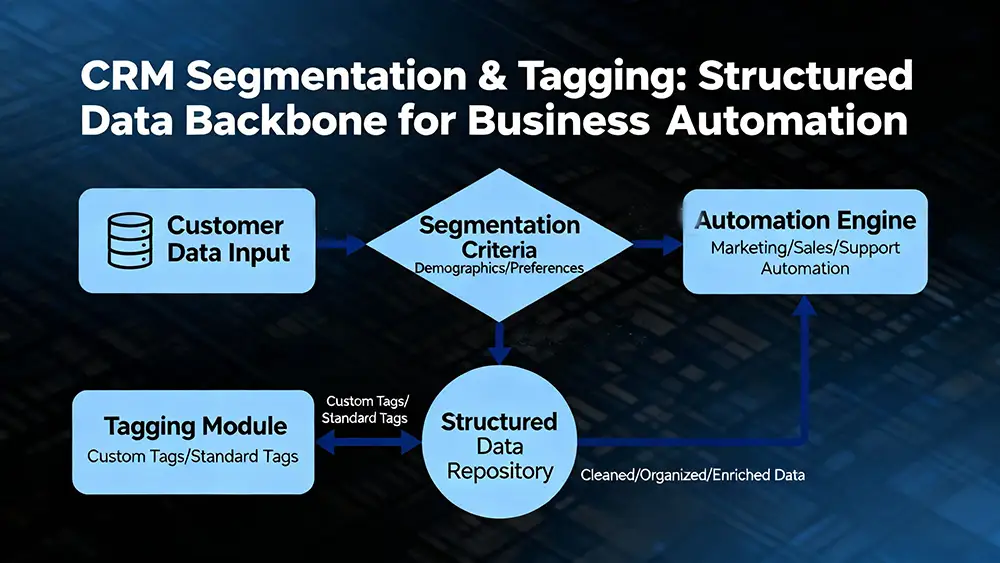
Modern CRMs are more than digital address books; they are the engines that power marketing, sales, and customer retention. In today’s landscape, they must facilitate automation, attribute conversions, and manage lifecycle follow-up. This is where a robust CRM data structure becomes critical. Without a clear segmentation strategy and tagging taxonomy, businesses suffer from missed follow-ups, inconsistent outreach, and messy CRM records. By implementing structured workflows and automation logic based on clean data, companies can achieve consistency, efficiency, and scalable growth.
Key Takeaways
- Why a clear segmentation strategy and tagging taxonomy are foundational to effective CRM and automation.
- How missed follow-ups and generic automation stem from fragmented data and manual processes.
- How consistent field mapping, naming conventions, and data hygiene enable powerful segmentation, automation, and follow-up.
- Why your CRM’s structure directly determines lead quality, attribution accuracy, and lifecycle outcomes.
Why This Concept Matters
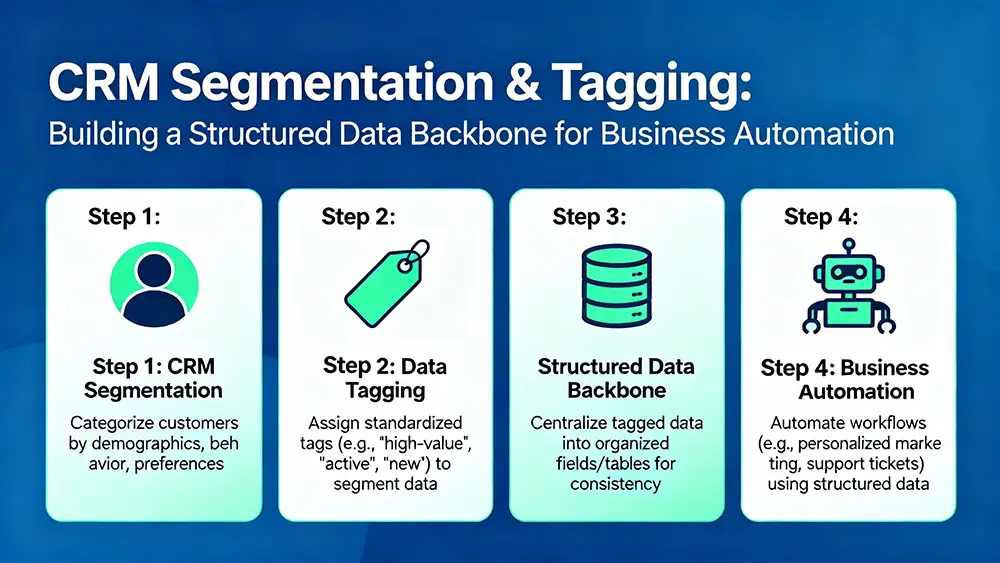
A Customer Relationship Management (CRM) system acts as the operational backbone for your entire customer journey, connecting marketing, sales, and retention efforts. However, its power is often wasted. Automation initiatives fail, and reporting becomes meaningless without a foundation of clean data and intentional system design. When contact attributes, lifecycle stages, and intent signals are not clearly defined, even the most advanced CRM becomes a source of chaos rather than clarity. A well-designed structure ensures every piece of data serves a purpose, driving meaningful interactions and measurable results.
Real-World Example
Consider a service business capturing leads from its website, social media ads, and networking events. Without a plan, all contacts are dumped into the CRM with inconsistent tags and no clear lifecycle stages. The sales team struggles to identify hot leads, and automated emails are generic, leading to low engagement. This is a classic case of messy data causing manual sorting and weak reporting visibility. After implementing a clean tagging taxonomy based on lead source and interest, defining lifecycle stages (e.g., “New Lead,” “Qualified,” “Customer”), and creating behaviour-based segments, everything changes. Automated follow-ups are now perfectly aligned with user intent, response times improve dramatically, and the business sees a significant increase in conversions. This structured approach is key to eliminating the hidden costs and inefficiencies of manual follow-up.
Common Mistakes
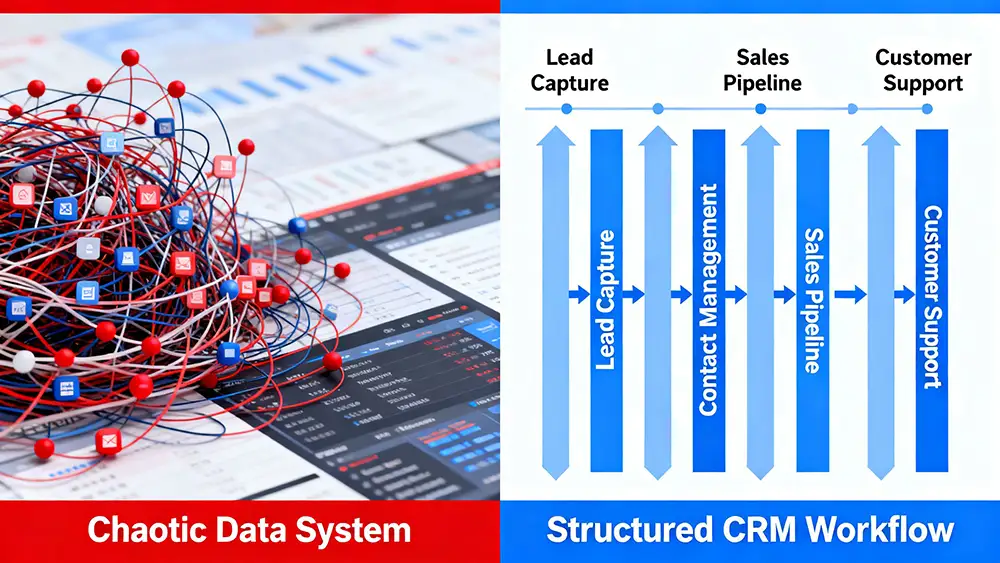
Many businesses undermine their CRM’s potential with common, avoidable errors. These include over-tagging contacts without a clear taxonomy, leading to a cluttered and unusable system. Other pitfalls are inconsistent tag naming conventions, using tags for notes instead of structured data, and failing to define clear lifecycle stages. Many also struggle with poor field mapping from forms and integrations, which pollutes the CRM with bad data from the start. Perhaps the biggest mistake is automating processes before cleaning the underlying data or creating static segments that never update with new customer information.
What You Should Aim For
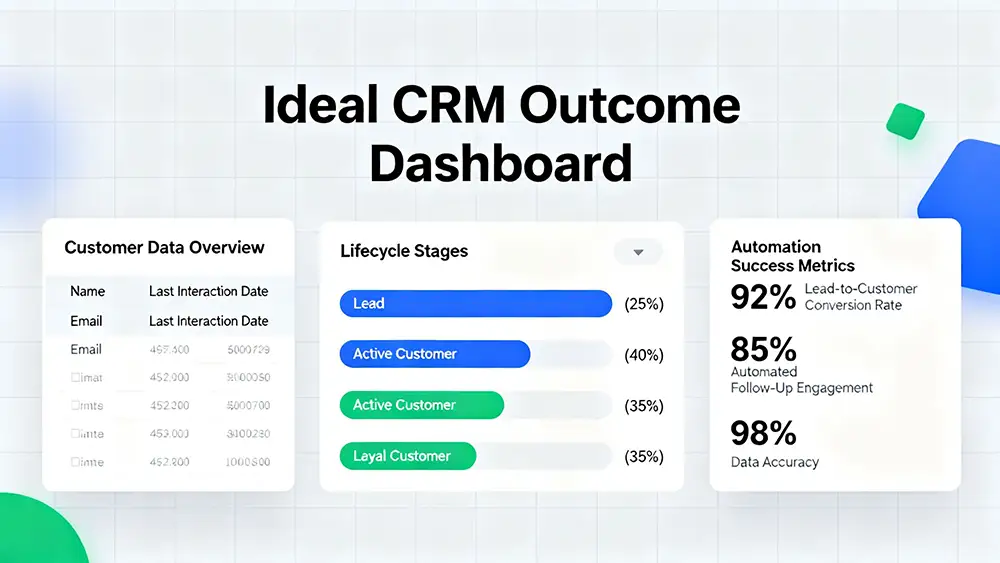
Success with CRM segmentation and tagging is defined by clarity and efficiency. The goal is to create a centralised repository of clean, actionable customer data. This starts with a clean tagging taxonomy and clear, lifecycle-based segmentation that automatically categorises contacts. From there, you can build automation aligned to customer intent and behaviour, ensuring consistent follow-up across all channels. The result is not just improved lead quality and better attribution reporting; it’s a system that creates scalable workflows with far less manual work, freeing your team to focus on high-value activities and building a cohesive local business growth engine instead of relying on fragmented marketing efforts.
Supporting Data & Research
Accepted industry principles confirm that data hygiene is the bedrock of successful marketing automation. Businesses that prioritize a structured CRM see higher adoption rates among sales and marketing teams because the tool becomes a reliable asset rather than a frustrating chore. Research consistently shows that personalized communication, powered by effective segmentation, yields significantly higher engagement and conversion rates than generic messaging. Furthermore, a well-managed lifecycle system prevents lead leakage and improves customer retention. The core idea is simple: the quality of your automation output is directly proportional to the quality of your data input. This is a foundational concept for understanding how high-performance websites are built to convert visitors effectively.
Frequently Asked Questions
What is CRM segmentation?
CRM segmentation is the process of dividing your contacts into smaller groups based on shared characteristics, such as demographics, behavior, or purchase history, to enable more targeted communication.
Why is a tagging strategy important?
A tagging strategy creates a consistent system for labeling contacts based on their actions, interests, or status. This taxonomy makes segmentation, automation, and reporting accurate and scalable.
What are lifecycle stages in a CRM?
Lifecycle stages define a contact’s journey with your business, from a new subscriber to a qualified lead, customer, and advocate. They help you track progress and trigger relevant actions.
How do automation triggers work?
Automation triggers are specific conditions or actions—like a contact submitting a form, clicking a link, or receiving a tag—that automatically start a workflow, such as an email sequence or a task for a sales rep.
What is data hygiene?
Data hygiene is the practice of maintaining clean, accurate, and up-to-date information in your CRM. It involves removing duplicates, correcting errors, and standardizing data formats.
Can you explain field mapping?
Field mapping is the process of connecting data fields from an external source (like a web form or another app) to the corresponding fields in your CRM, ensuring information is stored correctly.
What's the difference between a tag and a custom field?
Tags are flexible labels used to categorize contacts based on temporary states or actions (e.g., “attended_webinar_2024”). Custom fields store permanent, structured data (e.g., “Job Title”).
How does segmentation improve personalization?
By grouping contacts with similar attributes or behaviors, segmentation allows you to tailor your messaging, offers, and content to their specific needs and interests, making communication feel more personal.
Should I clean my data before setting up automation?
Absolutely. Building automation on top of messy data leads to errors, irrelevant messaging, and unreliable results. Always start with a clean data foundation.
How often should I review my CRM segments and tags?
It’s good practice to review your segmentation and tagging strategy quarterly or semi-annually to ensure it still aligns with your business goals and that your data remains clean and organized.
Webpuzzlemaster CRM & Automation Services
Webpuzzlemaster Digital Marketing Agency designs CRM and automation systems that align data structure, segmentation, and workflows to support scalable growth, accurate attribution, and consistent follow-up.
Delivered by Webpuzzlemaster Digital Marketing Agency, led by Ruth Kuttler.
We specialize in transforming chaotic CRMs into powerful growth engines. Our process involves auditing your existing data, developing a clear tagging taxonomy, and defining lifecycle stages that match your customer journey. We then build intelligent automation workflows that nurture leads, streamline sales processes, and provide clear reporting on what’s working. This strategic approach is essential for ensuring your business maintains visibility in a search landscape no longer solely reliant on traditional algorithms.
About the Author
Ruth Kuttler, AI Visibility Engineer™ & Digital Strategy Architect
Ruth specializes in designing the data systems that power modern marketing and sales. With deep expertise in CRM architecture, automation strategy, and integration logic, she helps businesses move from fragmented data to a single source of truth. Her approach ensures that technology serves strategy, enabling teams to work more efficiently and make data-driven decisions that fuel sustainable growth.
Your Next Step
If your CRM isn’t driving measurable revenue, the issue usually isn’t the platform—it’s the lack of intentional segmentation and tagging architecture behind it. The next step is to audit how contacts are currently tagged, where data is being lost or overgeneralized, and how automations are (or aren’t) responding to real buyer behavior. A properly structured segmentation strategy turns your CRM into a growth engine—powering smarter follow-ups, cleaner data, stronger personalization, and higher conversion rates without adding operational overhead.