


Every business striving for steady growth encounters the same set of obstacles—missed leads, slow response times, inconsistent follow-up, and manual task overload. This rings especially true for local service providers, retailers, healthcare groups, and professional practices. Inconsistent communication and scattered customer details often result in an unpredictable pipeline and stunted revenue. That’s where a CRM & Automation Engine comes into play: by incorporating centralized customer data, automated workflows, lifecycle automation, lead nurturing, segmentation, and AI-assisted follow-up, you can break free from the limits of manual operations and unlock a smoother path to growth.
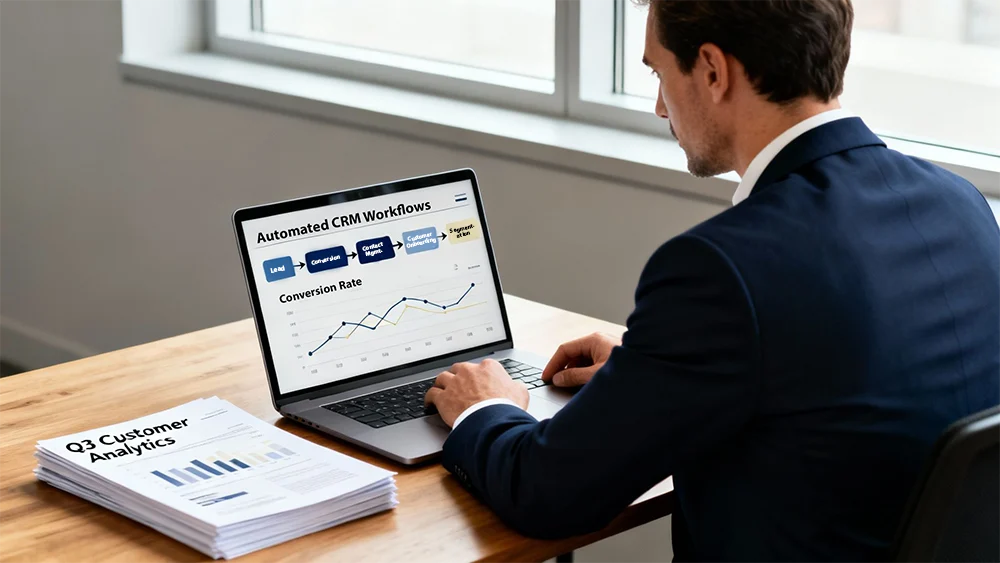
Manual systems force your team to rely on memory or clunky spreadsheets, leaving you at risk for lost opportunities and fragmented insights. The absence of process automation causes bottlenecks—your sales reps forget follow-up calls, onboarding gets delayed, and promising leads slip through the cracks. By centralizing your customer relationships and automating the touchpoints, a CRM with strategic workflow automations builds the consistency, speed, and intelligence you need for reliable expansion.
Key Takeaways
What you’ll learn:
- Why centralized customer data, automated workflows, and lifecycle automation is essential for predictable scaling
- How the CRM & Automation Engine solves missed leads, slow response times, and uncompounded manual workflows
- How pipeline visibility, automated task management, integrated communications, and personalized, trigger-based messaging produce measurable results
- What embracing automation means for customer experience, team productivity, and operational stability
Why This Concept Matters
Centralized customer data is the starting point for any successful CRM & Automation strategy. When all information—contacts, conversations, purchases, preferences, and lifecycle stages—lives in one organized system, your team gains a 360-degree view of every opportunity. Automation then ensures every contact gets timely attention and follow-up without requiring staff to remember dozens of individual tasks daily.
Modern business growth depends on:
- Centralized data: Unified records create a single source of truth, giving teams instant visibility into each customer’s journey.
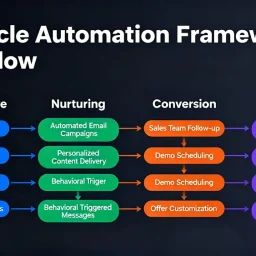
- Automated lifecycle workflows: From first inquiry to renewal and re-engagement, every step is mapped and triggered automatically.
- Segmentation: Smart grouping lets you target messages by interest, status, or behavior—ensuring communication is always relevant.
- Personalized nurturing: Automated sequences deliver the right message at the right time, boosting conversions and long-term loyalty.
- Trigger-based automation: Intelligent triggers activate follow-ups, task assignments, or escalations so nothing is missed.
Without this foundation, you’re left battling human error, lagging response times, and a disjointed customer journey. The CRM & Automation Engine transforms those chaotic manual processes into structured, scalable growth by removing hidden bottlenecks.
Real-World Example
Consider a local service business—let’s say a home repair company—that has been tracking leads in Excel, manually calling prospects, and emailing quotes ad hoc. Missed follow-ups are common, conversion rates are stagnant, and monthly revenue swings up and down unpredictably.
After implementing a CRM & Automation Engine:
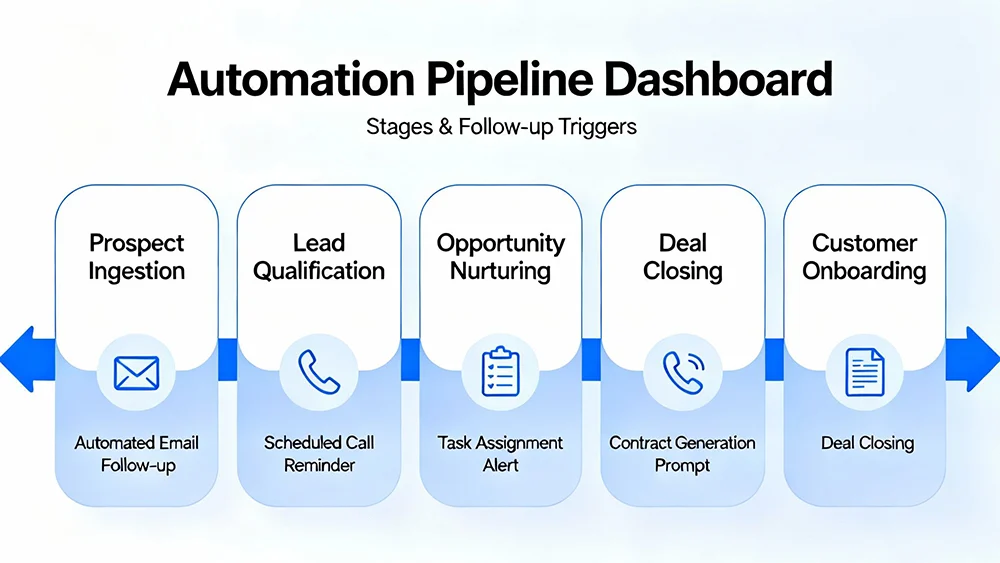
- Every new inquiry is instantly captured and assigned.
- Automated text and email sequences nurture leads within minutes of contact, setting expectations and providing early value.
- Follow-up reminders, quotes, and onboarding steps are all triggered automatically, so no task is forgotten.
- The business owner can see which leads are hot, who needs more nurturing, and which deals are likely to close this month—all at a glance.
As a result, conversions and forecastable revenue grow dramatically. No lead is left behind, and the team spends less time chasing, more time closing.

Common Mistakes
Many businesses think of CRM as just a digital Rolodex, missing out on its real value as a growth engine. Some of the most frequent mistakes include:
- Relying on spreadsheets or manual lists to track customer activity
- Depending on memory (or sticky notes) for follow-up and key dates
- Slow, inconsistent, or entirely missing nurturing sequences for prospects and customers
- Not using triggers for automated reminders, renewal alerts, or workflow escalations
- Keeping the onboarding steps manual, leading to delays and errors
- Poor segmentation—treating every contact the same and missing personalization opportunities
- Failing to develop the CRM & Automation Engine as a strategic, scalable business platform
These missteps don’t just waste time—they limit both your revenue potential and your capacity to scale.
What You Should Aim For
A high-performing CRM & Automation Engine delivers:
- Centralized data: Every interaction, deal, and document in one unified system
- Automated lifecycle sequences: Welcome emails, nurture flows, onboarding, renewal reminders—all on autopilot
- Clear lead scoring: Instantly see who is most engaged and ready to buy
- Personalized nurture flows: Targeted content and offers based on actions, stage, or interests
- Predictable pipeline and forecasting: Accurate, real-time visibility into future revenue and team performance
When these outcomes are achieved, your team operates with clarity, confidence, and efficiency. Customer experience improves, handoffs are seamless, and growth becomes not only possible, but predictable.
Supporting Data & Research
Industry observations confirm that automating customer interactions leads to higher engagement, faster conversion cycles, and increased revenue stability. Businesses that transition from manual follow-up and fragmented data to an automated CRM platform often report:
- Improved response times to leads and customers
- Increased consistency in customer communications
- Higher employee productivity due to reduced manual task burden
- Greater data accuracy, enabling better segmentation and more personalized outreach
- Enhanced forecasting and pipeline management
As automation adoption grows across nearly every industry segment, companies that resist modernization risk falling behind both in customer experience and operational efficiency. The shift to automated CRM is not just about saving time—it’s about enabling teams to deliver higher value at every touchpoint, nurture relationships at scale, and make informed, data-driven decisions.
Frequently Asked Questions
How does CRM & Automation impact day-to-day operations?
Automation eliminates repetitive manual tasks, enables faster responses, and ensures more consistent communication with leads and clients.
Will automation make customer interactions less personal?
No—CRM & Automation systems allow you to personalize messaging and segment your audience, making communications feel more genuine and tailored.
How does automated follow-up boost conversions?
By delivering timely, relevant touchpoints, automation keeps your brand top-of-mind so prospects are nurtured until they’re ready to buy.
What’s the difference between CRM and marketing automation platforms?
CRM is the hub for customer data and relationships; automation platforms manage workflows and communications. The most powerful solutions combine both.
How do lifecycle workflows support predictable growth?
Automated lifecycle sequences map each step for leads and customers, ensuring no opportunity is missed and pipeline health is maintained.
Does automation replace my sales or support team?
Not at all—it empowers your team to do higher-value work by removing manual burdens and supporting proactive engagement.
How does CRM & Automation improve forecasting and reporting?
With accurate, centralized data, you can track pipeline movement, conversion rates, and predict revenue more effectively.
Is it difficult to segment my customer base for targeted communication?
Modern CRM & Automation platforms make segmentation easy, grouping contacts by behavior, stage, or custom criteria for tailored campaigns.
Can automation help with onboarding and renewals?
Yes—automated triggers and sequences ensure every new client receives consistent onboarding and never misses a renewal touchpoint.
What if I already have a CRM? Do I need more automation?
If your existing system isn’t automating follow-up, nurturing, and lifecycle management, you’re missing core growth opportunities.
Webpuzzlemaster CRM & Automation Services
Our CRM & Automation Engine streamlines your entire customer lifecycle with intelligent workflows, automated follow-up, segmentation, onboarding sequences, and pipeline visibility—turning your CRM into a predictable growth engine.
Delivered by Webpuzzlemaster Digital Marketing Agency, led by Ruth Kuttler, your AI Visibility Engineer™ & Digital Strategy Architect.
To reinforce these automation capabilities, Webpuzzlemaster also delivers integrated digital solutions that support smarter lead management — including Answer Engine Optimization combined with traditional SEO, website performance improvements, conversion-focused WordPress development, AI-assisted messaging, structured data optimization, content strategy, and local visibility enhancements through GBP and organic search. This unified approach ensures your CRM workflows run on a solid digital foundation, improving responsiveness, enhancing the user experience, and driving more predictable outcomes across your entire marketing and sales ecosystem.
About the Author
Written by Ruth Kuttler, AI Visibility Engineer™ & Digital Strategy Architect, specializing in CRM architecture, automation frameworks, lifecycle design, and intelligent customer journeys.
Your Next Step
Ready to automate your customer journey and scale with confidence? Let’s design your CRM & Automation Engine.