



Mobile usage now dominates how customers search, browse, and interact with businesses online. Yet, many businesses still treat their mobile website as an afterthought, leading to high bounce rates on mobile, a poor user experience, and ultimately, lost revenue. A mobile-first website design isn’t just a trend; it’s a fundamental requirement for building customer trust and achieving meaningful conversions.
This approach, which prioritizes interface design and conversion optimization for the smallest screens first, directly addresses how speed, stability, and user experience clarity determine whether your valuable traffic converts into qualified leads or is simply wasted.
Key Takeaways
- Why mobile-first design, responsive layouts, and page speed directly impact lead quality and conversion.
- How high bounce rates, user drop-off, and low marketing ROI are symptoms of a poor mobile experience.
- How responsive design and layout optimization improve user flow and decision clarity.
- Why strong mobile performance is a non-negotiable prerequisite for success with SEO, paid ads, and advanced AI visibility strategies.
Why This Concept Matters
In today’s digital landscape, a user’s first impression is overwhelmingly formed on a mobile device. Page speed, layout stability (preventing unexpected shifts), and overall mobile usability are no longer just technical metrics; they are direct indicators of your brand’s credibility. A slow, confusing mobile site signals a lack of care and frustrates users at the exact moment they are considering a purchase or inquiry.
By focusing on clear user paths and a seamless experience, you build trust and guide visitors toward conversion—while building trust through consistent local business information and user experience. This is why it’s so important for businesses to understand the strategic implications when they why choose mobile-first website design for websites, mobile apps, or responsive website design.
Real-World Example
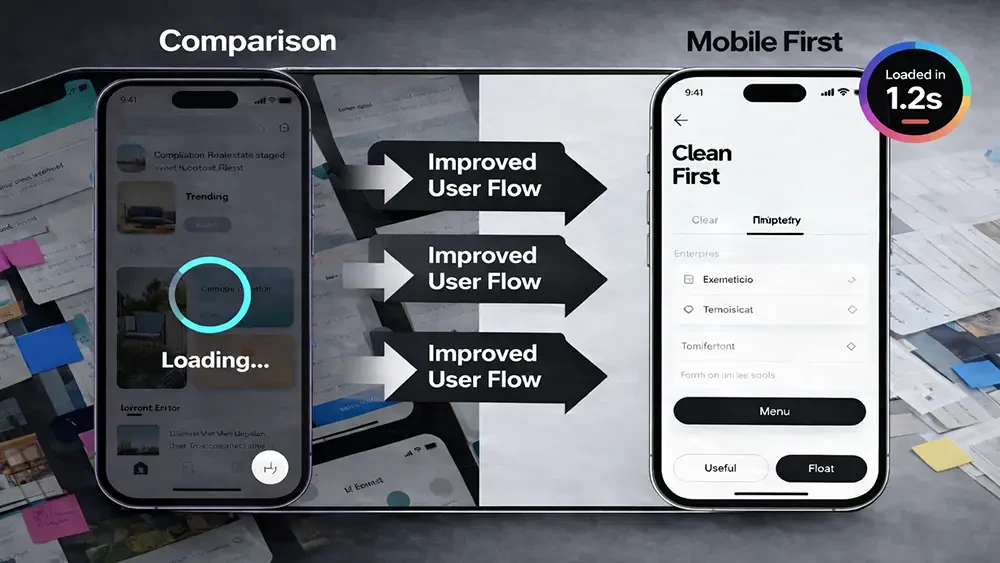
Consider a service-based business with a website that looks great and performs well on desktop computers but is a nightmare on mobile devices. Visitors on their phones struggle with slow load times, tiny navigation buttons, and forms that are nearly impossible to fill out. The result is a stream of lost leads and wasted ad spend.
After diagnosing these performance bottlenecks and UX friction points, the business invests in a mobile-first website design redevelopment. The new site is fast, the navigation is intuitive, and the calls-to-action are clear. Consequently, the business sees a significant increase in mobile engagement, a lower bounce rate, and a much higher conversion rate for qualified leads—while eliminating missed follow-ups through structured CRM and automation workflows.
Common Mistakes
The most frequent error is designing for a large desktop screen first and then trying to shrink it down for mobile, which often leads to a compromised experience. This results in common mistakes like ignoring mobile performance metrics, creating cluttered layouts that overwhelm small screens, and using small, non-touch-friendly clickable elements. Other critical errors include difficult navigation paths and a complete lack of testing across different devices and browsers. For professional services, this can be devastating, which is why a responsive web design for sustainable lead generation is so critical to their success.
What You Should Aim For
Success with mobile-first website design is measured by a seamless and effective user experience. Your goals should include:
- Fast, stable load performance that meets or exceeds Core Web Vitals standards.
- A clear value proposition visible “above the fold” without requiring the user to scroll.
- Friction-free user journeys with intuitive navigation and simple forms.
- Strong trust and credibility signals, such as testimonials, security badges, and clear contact information.
- One primary conversion goal per page, supported by a clear call-to-action and robust tracking.

Supporting Data & Research
Accepted industry principles confirm the importance of a mobile-centric approach. Google’s Core Web Vitals (Largest Contentful Paint, First Input Delay, and Cumulative Layout Shift) are direct ranking factors that measure the speed, interactivity, and visual stability of a page—all critical components of the mobile experience. User behavior research consistently shows that mobile users have less patience for slow-loading pages and complex interfaces. Their attention is limited, and decisions are made quickly.
A website that fails to provide a clear, fast, and stable path to information or action will be abandoned in favor of a competitor’s. This performance foundation is also essential for more advanced strategies, as a well-structured site is a prerequisite for how an AI Visibility Engine structures content for better search presence.
Frequently Asked Questions
What is the difference between mobile-first and responsive design?
Mobile-first is a design strategy where you begin by designing for the smallest screen (a smartphone) and then work your way up to larger screens. Responsive design is the technical method that allows a single website layout to adapt to fit any screen size. A mobile-first approach uses responsive design to achieve its goals.
How does a mobile-first approach affect SEO?
Since Google predominantly uses the mobile version of a site for indexing and ranking (mobile-first indexing), a site optimized for mobile will generally perform better in search results. Page speed and user experience are significant ranking factors, both of which are central to this design philosophy.
Why is page speed so important for mobile users?
Mobile users are often on the go, using less stable network connections, and have lower patience for delays. A slow-loading site leads to high bounce rates, as users will quickly abandon it for a faster alternative.
What are Google's Core Web Vitals?
They are a set of specific metrics Google uses to measure a webpage’s overall user experience. They assess loading speed (Largest Contentful Paint), interactivity (First Input Delay), and visual stability (Cumulative Layout Shift).
Can I just have a separate mobile version of my site?
While possible (using an “m.” subdomain), it is no longer recommended. It creates two separate sites to manage, can cause SEO issues like duplicate content, and provides a less consistent user experience than a single responsive site.
How do I know if my website is mobile-friendly?
You can use Google’s Mobile-Friendly Test tool. Additionally, you can simply browse your website on your own smartphone to evaluate its speed, readability, and ease of navigation.
What are some key elements of a good mobile user experience?
Key elements include fast load times, simple navigation, large and easily tappable buttons and links, readable text without zooming, and streamlined forms.
How does mobile usability impact conversion rates?
Poor usability creates friction and frustration, causing users to abandon tasks like filling out a form or completing a purchase. A seamless, intuitive mobile experience removes these barriers, directly leading to higher conversion rates.
What's the first step to implementing a mobile-first strategy?
The first step is to audit your current website’s performance on mobile devices. Analyze metrics like mobile bounce rate, load times, and user behavior to identify the biggest points of friction.
Is mobile-first design expensive to implement?
The cost varies, but it should be viewed as a necessary investment rather than an expense. The return on investment comes from improved engagement, higher conversion rates, and better search rankings, which often outweighs the initial cost.
Webpuzzlemaster Website Performance Services
Webpuzzlemaster Digital Marketing Agency designs high-performance, mobile-first websites that prioritize user experience, speed, and conversion. We identify and eliminate performance bottlenecks while creating intuitive, responsive designs that build trust and guide users toward action. Our approach ensures your website delivers a seamless experience across all devices and supports consistent lead generation.
Our team specializes in creating a conversion architecture that aligns with user intent, ensuring every visitor is guided through a clear, purposeful journey. We implement comprehensive performance measurement to track progress and continuously optimize for better results. By focusing on both the technical and user-facing aspects, we build websites that are not just fast, but effective.
About the Author
Ruth Kuttler, AI Visibility Engineer™ & Digital Strategy Architect, has over 20 years of experience in high-performance WordPress development. Ruth focuses on the intersection of technical excellence and user-centric design. Her expertise lies in building websites that are not only fast and stable but also strategically designed to maximize engagement and conversions. She is passionate about helping businesses translate their brand’s value into a seamless and compelling digital experience.
Your Next Step
If your website is not delivering a seamless mobile experience, you are likely losing trust and conversions without realizing it. Mobile-first design is no longer optional—it is a core requirement for visibility, engagement, and growth. Now is the time to evaluate your website performance and user experience to ensure your business is meeting modern customer expectations.