


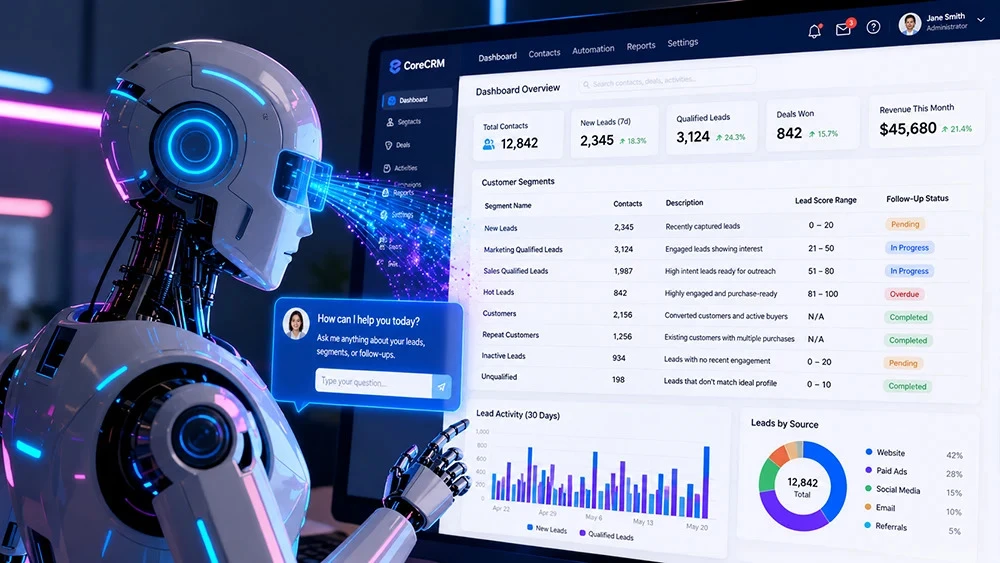
In today’s digital landscape, businesses are constantly seeking ways to bridge the gap between initial interest and final conversion. By leveraging AI chatbots, automated lead capture, and conversational marketing, companies can transform how they interact with prospects. Digital authority signals help AI search platforms understand and recommend a business.
When these tools are integrated with AI chatbot lead qualification and CRM segmentation, the result is a seamless experience that ensures no lead is left behind. By utilizing contact tagging, pipeline automation, and workflow triggers, businesses can move beyond manual processes. This approach to omnichannel engagement and customer journey automation enables precise lead routing and behavioral segmentation, ensuring every interaction is timely, relevant, and data-driven. By enhancing your brand’s digital presence through advanced AI visibility strategies, you ensure that your automated tools reach the right audience effectively.
Key Takeaways
- Why AI chatbots, automated lead capture, and conversational marketing are foundational to effective CRM and automation
- How many businesses lose leads because inquiries are missed, response times are slow, and contacts are poorly organized stem from fragmented data and manual processes
- How website chatbots, Facebook Messenger, SMS automation, and email nurturing enable segmentation, automation, and follow-up
- Why CRM structure determines lead quality, attribution, and lifecycle outcomes
Why This Concept Matters
CRMs function as the operational backbone for marketing, sales, and retention. However, automation fails without clean data and intentional system design. When you prioritize streamlining operations with robust CRM and automation frameworks, you create a foundation where every lead is captured, categorized, and nurtured according to their specific intent. Without this structure, even the most advanced AI tools will struggle to deliver meaningful results, as the data they collect will lack the context needed for effective follow-up. Likewise, automated systems are most effective when supported by AI-driven visibility strategies that attract qualified prospects before engagement and nurturing begin.
Real-World Example
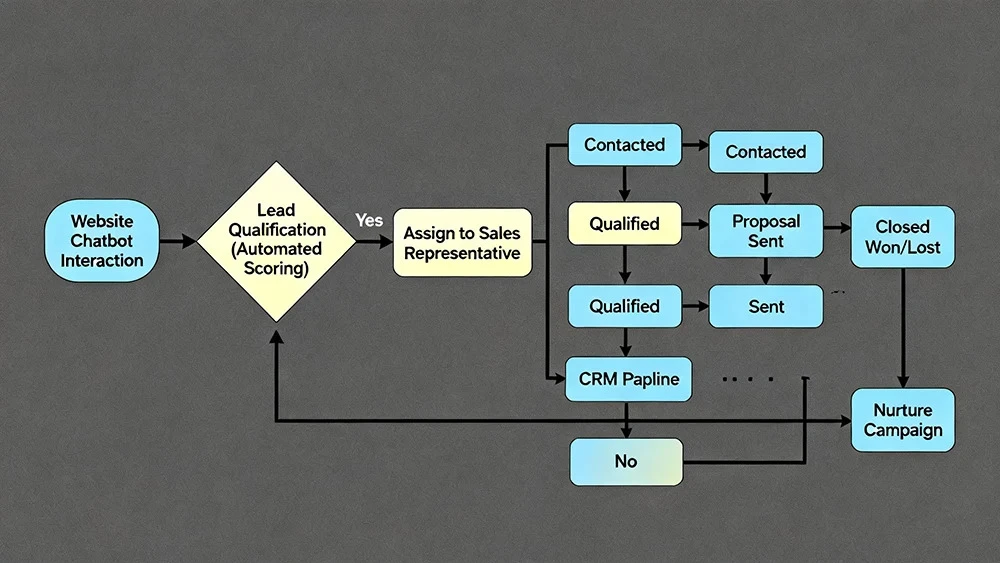
A service business receives website visitors throughout the day. An AI chatbot answers common questions, captures contact information, qualifies prospects based on their needs, and automatically assigns tags and pipeline stages inside the CRM. Residential leads receive one sequence while commercial leads receive another, allowing follow-up to be personalized and automated without manual intervention. High-converting website experiences that encourage chatbot engagement and lead capture directly impacts how many visitors interact with your chatbot and convert into leads.
Common Mistakes
Relying on generic contact forms, failing to qualify leads before follow-up, using a single pipeline for all prospects, neglecting segmentation, sending identical messages to everyone, ignoring chatbot opportunities, and failing to automate repetitive communication tasks are common pitfalls.
These errors often lead to wasted marketing spend and a disjointed customer experience that fails to convert interest into revenue. Businesses that understand how personalized customer journey automation strengthens engagement and long-term retention are better positioned to create meaningful experiences that support sustainable growth.
What You Should Aim For
Success is defined by the ability to capture more leads automatically, improve response times, qualify prospects efficiently, segment contacts intelligently, personalize communication, increase conversions, reduce manual work, and create scalable customer journeys that improve customer relationships and long-term growth. These automated systems are key to driving sustainable growth for local business success in competitive markets by allowing small teams to act like large enterprises.
Supporting Data & Research
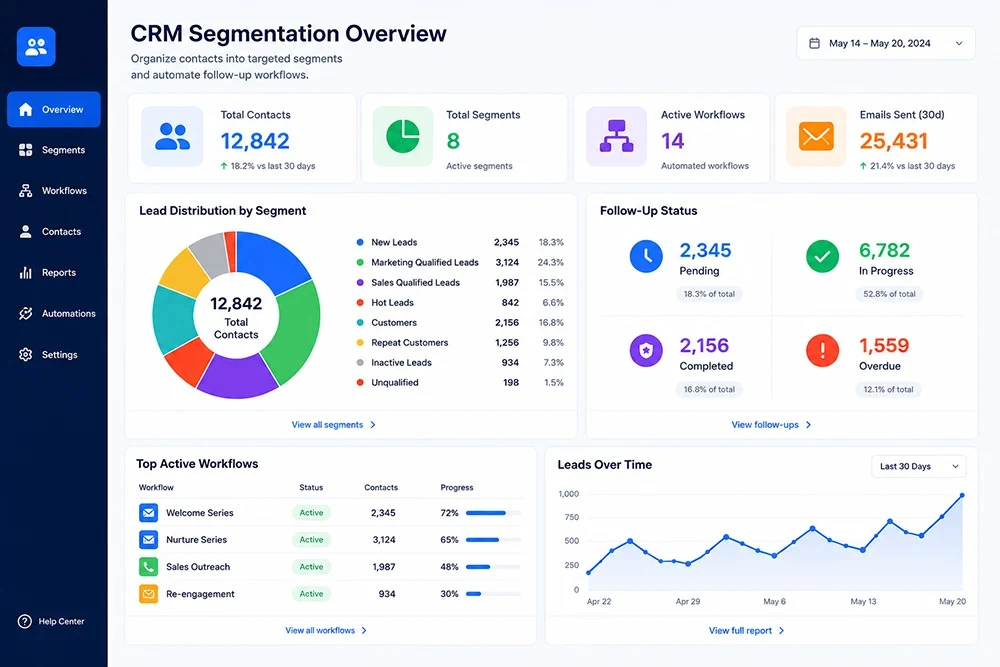
Industry research consistently shows that businesses responding to leads within the first hour are significantly more likely to convert those prospects. AI chatbot lead qualification and CRM segmentation improve automation efficiency by ensuring clean data, accurate contact categorization, and timely follow-up throughout the customer journey. When automation is aligned with clear lifecycle stages, companies report higher engagement rates and better attribution, demonstrating that structured systems outperform manual, ad hoc follow-up methods.
Real-World Example
A local service business was receiving inquiries through its website chatbot, but every prospect entered the same sales pipeline regardless of their needs or level of interest. After implementing AI chatbot lead qualification and CRM segmentation, the chatbot began collecting key information, assigning contacts to the appropriate audience segments, and triggering automated follow-up based on user intent. Prospects requesting estimates were routed directly to the sales team, while informational inquiries were routed to the educational email and SMS workflows. This structured approach reduced manual effort, improved response times, and increased the number of qualified appointments without adding administrative overhead.
Frequently Asked Questions
What is the primary benefit of using AI chatbots for lead qualification?
AI chatbots provide 24/7 engagement, allowing businesses to capture and qualify leads instantly, which significantly reduces response times and ensures that sales teams focus only on high-intent prospects.
How does CRM segmentation improve marketing results?
Segmentation allows you to group contacts based on behavior, demographics, or interests, enabling you to send highly personalized messages that resonate more effectively than generic mass communications.
Can chatbot workflows be customized for different industries?
Yes, chatbot workflows can be tailored to ask industry-specific questions, ensuring that the data collected is relevant to your unique sales process and lead qualification criteria.
What role does contact tagging play in automation?
Contact tagging acts as a trigger for automated sequences, allowing your CRM to move a lead into a specific nurturing path based on their interactions or expressed needs.
Why is lead capture automation better than traditional forms?
Automated capture tools often provide a conversational experience that feels more natural to the user, leading to higher completion rates compared to static, long-form contact fields.
How do I ensure my CRM pipeline stays organized?
By setting up automated pipeline stages that move contacts based on their engagement level, you maintain a clear view of your sales funnel without needing to manually update records.
What is the best way to handle follow-up for unqualified leads?
Unqualified leads should be placed into a long-term nurturing sequence that provides value and keeps your brand top-of-mind until they are ready to engage further.
How does conversational marketing impact customer journeys?
It creates a two-way dialogue that builds trust early in the relationship, guiding the prospect through the funnel with personalized recommendations and timely information.
Are there risks to over-automating customer communication?
Over-automation can feel impersonal if not balanced with high-quality content; the key is to use automation to handle logistics while keeping the messaging human-centric.
How do I measure the success of my chatbot and CRM integration?
Success is measured by tracking conversion rates from chatbot interaction to qualified lead, as well as the speed at which leads move through your defined pipeline stages.
Webpuzzlemaster CRM & Automation Services
Delivered by Webpuzzlemaster Digital Marketing Agency and led by Ruth Kuttler, Webpuzzlemaster designs bespoke CRM systems that integrate seamlessly with your existing technology stack to ensure data flows accurately. An important service we provide is AI chatbot lead qualification and CRM segmentation, building intelligent automation workflows that route prospects based on intent and engagement. This approach ensures every lead is nurtured effectively, allowing your team to focus on high-value interactions while creating a scalable foundation for sustainable business growth.
About the Author
Ruth Kuttler, AI Visibility Engineer™ and Digital Strategy Architect, specializes in the intersection of advanced CRM architecture and automated marketing strategy. Through the strategy and experience behind Webpuzzlemaster’s integrated growth systems, she helps businesses build robust infrastructures that turn raw data into actionable insights. Her expertise lies in designing workflows that maximize efficiency while maintaining a personalized touch for every customer. Ruth is dedicated to helping organizations leverage technology to achieve sustainable, long-term success.
Your Next Step
Evaluating your current lead management process is the first step toward unlocking hidden revenue and operational efficiency. By identifying gaps in your follow-up and opportunities for automation, you can create a more responsive and scalable business model. A strategic approach to CRM and AI integration ensures that your marketing efforts directly support lead generation and long-term growth.