


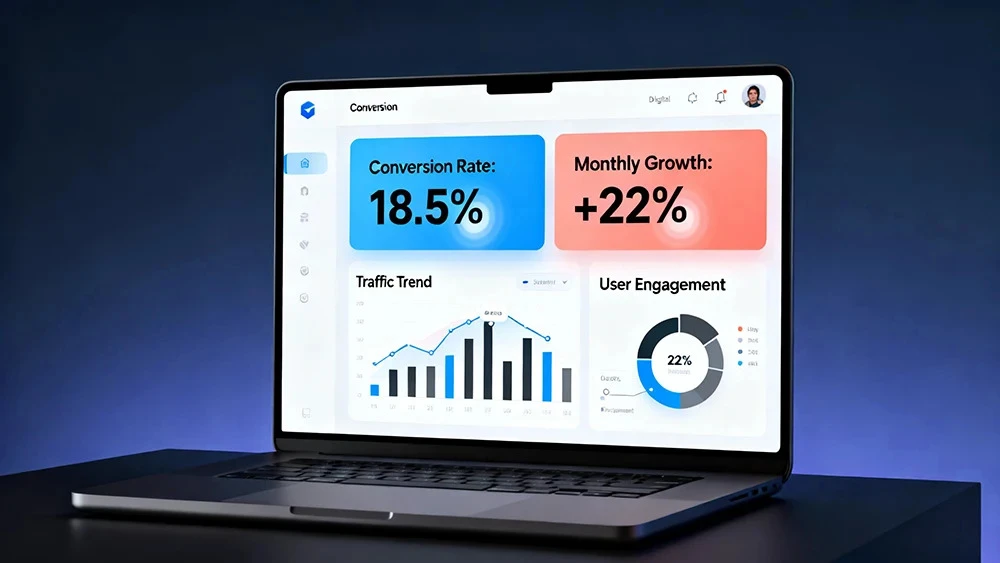
In the digital landscape, the Website Performance & Conversion Engine is the bridge between traffic and revenue. Many businesses invest heavily in driving traffic but fail to convert visitors into leads because their websites lack clear conversion optimization strategies for high-performing websites, compelling calls to action, and trust-building elements. By integrating website conversion optimization, user experience, and strategic page layout, you ensure that every visitor has a clear path to engagement. Speed, stability, UX clarity, and intent alignment are the fundamental pillars that determine whether your traffic converts into qualified leads or is simply wasted. These same principles become even more powerful when combined with AI visibility and SEO strategies that attract qualified traffic, ensuring that businesses not only increase their online presence but also convert more visitors into customers.
Key Takeaways
- Why website conversion optimization, user experience, and trust signals directly impact lead quality and conversion
- How low conversion rates, high bounce rates, and weak calls to action show up as bounce, drop-off, and low ROI
- How mobile usability, page speed, and analytics improve user flow and decision clarity
- Why performance is a prerequisite for SEO, ads, and AI search visibility and answer-driven content strategies.
Why This Concept Matters
Performance is not just about technical metrics; it is about the user’s perception of your brand. Page speed, layout stability, and mobile usability directly influence trust. When a site loads instantly and provides a clear, friction-free path, users feel confident in their decision to engage, supporting local SEO strategies that improve visibility and conversions. In high-intent moments, even a millisecond of delay or a confusing layout can cause a visitor to abandon their journey, resulting in lost opportunities and diminished marketing ROI.
Real-World Example
A service company receives consistent website traffic but generates few inquiries. After improving calls to action, simplifying forms, and adding trust elements, conversion rates increase without increasing traffic. By diagnosing performance bottlenecks and removing UX friction, the company transformed its site from a passive brochure into an active lead-generation machine supported by CRM automation strategies that improve customer engagement and lead conversion efficiency.

Common Mistakes
- Focusing only on traffic while ignoring the conversion funnel
- Cluttered pages that overwhelm the user
- Poor mobile experience that frustrates smartphone users
- Weak or ambiguous calls to action
- Slow page load times that drive visitors away
- Lengthy, complex forms that discourage completion
- Failing to test layouts and user paths
What You Should Aim For
- Fast, stable load performance
- Clear value proposition above the fold
- Friction-free user journeys
- Strong trust and credibility signals
- One primary conversion goal per page with tracking

Supporting Data & Research
Modern web standards emphasize that user behavior is heavily dictated by the speed and stability of a page. Core Web Vitals serve as a benchmark for how users experience the loading performance, interactivity, and visual stability of a site. Research consistently shows that as page load time increases, bounce rates climb exponentially. Furthermore, clear decision-making is supported by minimalist design principles that reduce cognitive load, allowing users to focus on the primary conversion goal without distraction. Lead generation and sales are significantly enhanced by conversion-optimization strategies for high-performing websites. User behavior and engagement are also influenced by mobile-friendly responsive web design that improves user experience and conversion performance.
Frequently Asked Questions
Why is page speed critical for conversion?
Faster pages reduce bounce rates and keep users engaged, which is essential for turning visitors into leads.
What are the most important trust signals to include?
Testimonials, case studies, certifications, and clear contact information build credibility.
How does mobile usability affect my conversion rate?
Most users browse on mobile; if your site is not responsive, you lose a significant portion of your potential audience.
What is the best way to measure conversion success?
Use analytics tools to track goal completions, form submissions, and user behavior through heatmaps.
How many calls to action should a page have?
Ideally, one primary conversion goal per page to avoid confusing the user.
What are Core Web Vitals?
They are specific metrics that measure the loading, interactivity, and visual stability of a website.
Why do users leave my landing page immediately?
High bounce rates are often caused by slow loading, irrelevant content, or a confusing layout.
How can I simplify my lead capture forms?
Only ask for essential information to reduce friction and increase completion rates.
Does design impact conversion?
Yes, a clean, professional layout guides the user’s eye toward the most important information and actions.
How often should I test my website layout?
Continuous A/B testing is recommended to refine user paths and maximize conversion performance.
Webpuzzlemaster Website Performance Services
Delivered by Webpuzzlemaster Digital Marketing Agency and led by Ruth Kuttler, we specialize in transforming underperforming websites into high-conversion assets. Our team meticulously audits your site to identify speed bottlenecks and UX friction points. We implement conversion-optimization strategies for high-performing websites along with data-driven design changes that align with your business goals. This ensures that your site is fast, responsive, and built to convert. By focusing on performance architecture, we help you capture more leads and maximize your digital investment. Learn more about Webpuzzlemaster and our AI-driven approach to business growth.
About the Author
Ruth Kuttler, AI Visibility Engineer™ & Digital Strategy Architect, is a seasoned expert in high-performance WordPress development and conversion-focused UX design. With years of experience, she helps businesses bridge the gap between technical performance and marketing success. Her approach combines deep technical knowledge with a keen eye for user psychology to build websites that not only look great but perform exceptionally. She is dedicated to helping brands achieve scalable growth through strategic digital architecture.
Your Next Step
If your website is attracting visitors but not generating the leads or conversions you expect, it may be time to evaluate how performance, user experience, and conversion pathways are working together. Even small improvements to page speed, mobile usability, calls to action, and trust signals can have a significant impact on engagement and lead quality. We integrate optimization strategies for high-performing websites that support every aspect of your marketing efforts, from SEO and AI visibility to advertising and customer retention. Investing in website performance is not simply about technical improvements—it is about creating a better experience that turns traffic into measurable business growth.