


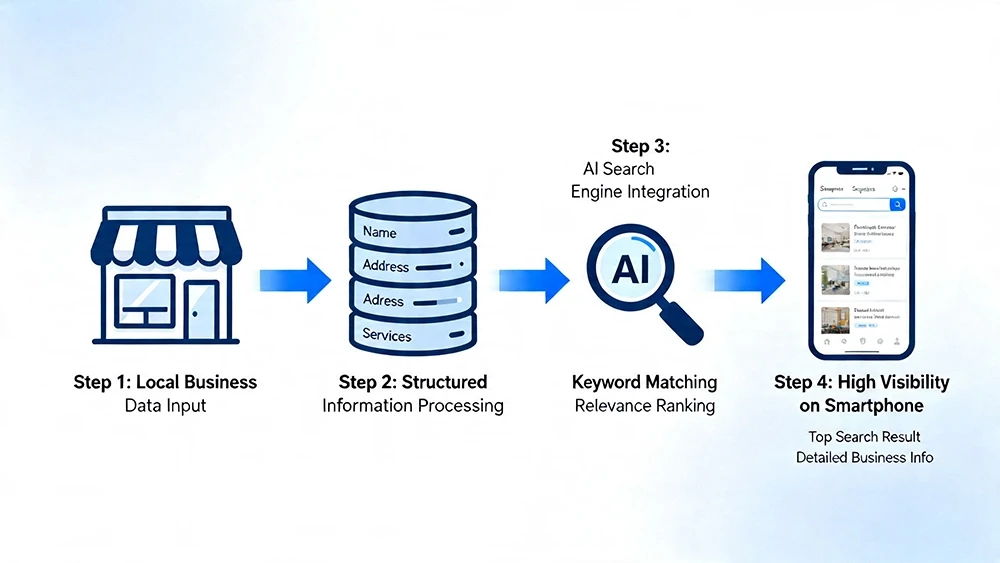
In today’s digital landscape, local search has evolved far beyond simple keywords and directory listings. AI-driven search engines now prioritize structured information, entity clarity, and data consistency to determine which businesses are most relevant and trustworthy. For local businesses, this means that success hinges on providing clear, consistent, and machine-readable data.
Without a solid foundation of structured information, businesses face low local visibility, poor lead quality, and a weak Google Business Profile performance. This article explains how aligning your business information for AI search—through concepts like structured data, entity clarity, and knowledge graph alignment—is the key to driving consistent local leads and achieving sustainable growth. In this article, we will explore why local businesses need structured information for AI search.
Key Takeaways
- Why structured data and entity clarity directly impact local visibility and customer trust.
- How low local visibility and inconsistent business information limit calls, inquiries, and conversions.
- How schema markup, NAP consistency, and Google Business Profile optimization strengthen relevance across local channels.
- Why consistency and credibility in your business’s digital footprint determine long-term local growth.
Why This Concept Matters
Modern consumer behavior is driven by immediacy and trust. When someone searches for a local service, AI algorithms analyze a vast network of information to provide the best answer. These systems rely on structured data to understand who you are, what you do, and where you operate. Factors like local search behavior, AI recommendations, customer reviews, proximity signals, and entity clarity all influence which businesses are discovered, contacted, and ultimately chosen.
If your business information is inconsistent or unstructured, AI systems cannot confidently recommend you, leaving you invisible to high-intent customers. Even when your business is visible in search, conversions depend heavily on fast-loading, mobile-optimized websites that guide users from discovery to action without friction, making performance a critical factor in turning local visibility into real leads. These are important reasons why local businesses need structured information for AI search.
Real-World Example
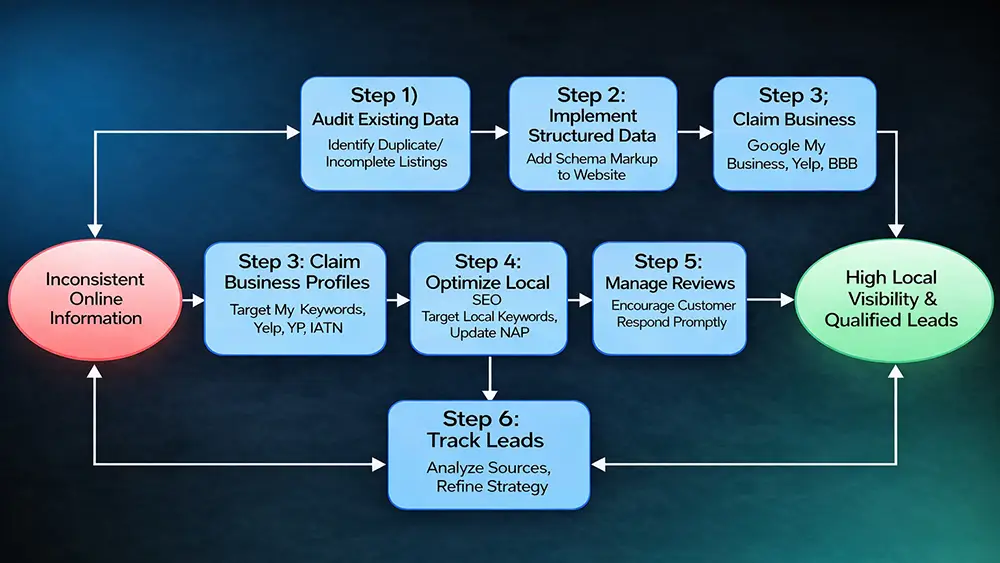
A local home service company relies on word-of-mouth and basic SEO but sees declining leads. Their business information is inconsistent across platforms, and their website lacks structured data. This results in missed calls and poor lead quality because search engines can’t verify their details or service area.
After implementing schema markup, aligning business details across all online directories, and strengthening their entity signals on their Google Business Profile, the company begins appearing in AI-generated results like map packs and answer boxes. As a result, they see a steady increase in qualified local inquiries from customers who are ready to book a service. This is precisely why local businesses need structured information for AI search.
To sustain growth, businesses must implement CRM and automation systems that capture inbound leads, segment audiences, and trigger follow-up sequences automatically, ensuring no opportunity is lost after initial contact.
Common Mistakes
Many local businesses struggle with visibility due to easily avoidable errors. These common mistakes prevent AI and search engines from trusting their information:
- Inconsistent NAP Data: Variations in the business name, address, and phone number across different websites and directories.
- Incomplete Google Business Profiles: Missing service details, hours, photos, or Q&A sections.
- Lack of Schema Markup: Failing to add structured data to the website to clarify services, location, and other key entity details.
- Thin Local Content: Not creating content that demonstrates expertise and relevance for the specific geographic areas served.
- Ignoring Reviews: Failing to actively encourage and respond to customer reviews, which are a critical trust signal.
- Disconnected Marketing Channels: Running ads, social media, and SEO in silos without a unified data strategy.
- Outdated SEO Practices: Focusing solely on keywords instead of building a comprehensive, entity-focused digital presence.
What You Should Aim For
Success in local AI search is defined by clarity, consistency, and credibility. Your goal is to create a digital footprint that is easy for both users and machines to understand. This includes:
- Clear local entity signals: Ensuring search engines understand exactly what your business is and does.
- Consistent business information across platforms: Maintaining accurate NAP data everywhere your business is mentioned online.
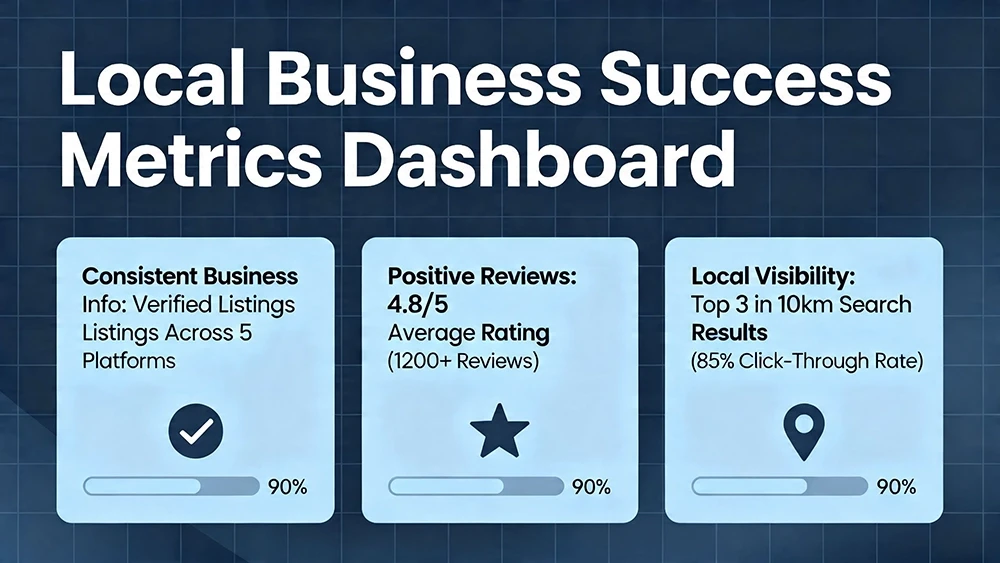
- Strong, authentic customer reviews: Building a reputation that fosters trust with potential customers.
- High-intent local visibility: Appearing in searches that are most likely to convert into leads and sales.
- Predictable inbound leads: Creating a reliable stream of qualified inquiries from your local market.
Supporting Data & Research
Generally accepted principles of consumer behavior show that trust and convenience are paramount in local search. Users overwhelmingly rely on reviews to make decisions and expect accurate, up-to-date information. Proximity is a major ranking factor, especially for “near me” searches conducted on mobile devices. Because so many users are finding local services on a smartphone or tablet, having a mobile-friendly website is essential for sustainable attorney lead generation.
This mobile-first trend means business owners must carefully weigh the advantages of mobile apps versus responsive website design to capture quality leads. To succeed, businesses need a comprehensive strategy that involves mapping out key business entities and rebuilding the content architecture for AI. This fundamental shift requires moving away from outdated SEO tactics and toward a modern AI visibility engine framework that prioritizes structured data. This shift is driven by AI visibility strategies that focus on entity relationships, structured content, and answer engine optimization, allowing businesses to be recognized and recommended in AI-generated search results.
Frequently Asked Questions
What is structured data for a local business?
Structured data is a standardized format (like schema markup) used to provide explicit information about your business, such as its services, location, hours, and reviews, directly to search engines.
How does AI search use my business information?
AI search engines compile and verify information from multiple sources to build a confident understanding of your business. They use this understanding to answer user questions, provide recommendations, and rank businesses in local results.
Why is my Google Business Profile so important for local visibility?
Your Google Business Profile is a primary source of information for Google Search and Maps. A complete and optimized profile is crucial for ranking in local packs and appearing in AI-driven results.
Will updating my NAP information everywhere improve my ranking?
Yes, consistent Name, Address, and Phone Number (NAP) data across all online platforms builds trust with search engines and is a foundational element of local SEO.
How do customer reviews affect my visibility in AI search?
Positive reviews and a high overall rating are strong trust signals. AI systems use review sentiment, frequency, and quantity to gauge a business’s reputation and credibility.
What does "entity optimization" mean for a local business?
Entity optimization is the process of clearly defining your business as a distinct entity online. It involves structuring your data, building connections between your brand and topics, and ensuring consistency across the web.
How can I appear in "near me" searches more often?
To improve visibility in proximity-based searches, ensure your address is correct on your Google Business Profile, create location-specific content, and build local citations.
Is schema markup necessary for a small local business website?
Yes. Schema markup gives you a competitive advantage by helping search engines understand your website’s content better, which can lead to enhanced search result features (rich snippets).
What's the difference between local citations and structured data?
Local citations are mentions of your business’s NAP information on other websites (like Yelp or industry directories). Structured data is code on your own website that explains what your content is about.
How long does it take to see results from local entity optimization?
While some changes can have a quick impact, building a strong, authoritative local entity is a long-term strategy. Consistent effort over several months typically yields significant and sustainable improvements in visibility and leads.
Webpuzzlemaster Local Business Services
Webpuzzlemaster Digital Marketing Agency helps local businesses build structured, AI-ready visibility systems that align business data, content, and trust signals across all platforms. We go beyond traditional SEO by implementing structured information, optimizing local profiles, and creating a unified presence that AI systems recognize and prioritize. The result is stronger visibility, higher-quality leads, and consistent growth in competitive local markets.
Delivered by Webpuzzlemaster Digital Marketing Agency, led by Ruth Kuttler, Webpuzzlemaster focuses on creating a predictable system for lead generation by ensuring your business is the clear, authoritative answer for customers in your area. We transform your scattered digital footprint into a cohesive and powerful asset that AI search engines favor. Our approach ensures you not only get found but are also chosen by high-intent customers.
About the Author
Ruth Kuttler, AI Visibility Engineer™ & Digital Strategy Architect, specializes in helping local businesses navigate the complexities of modern search. Her expertise lies in building robust digital strategies that integrate structured data, entity optimization, and AI-readiness. She is dedicated to demystifying digital marketing and providing businesses with the tools they need to achieve sustainable growth and dominate their local markets.
Your Next Step
If your business isn’t showing up consistently in local search or AI-driven results, the issue is usually a lack of structured, trustworthy information—not demand. When your data, content, and profiles are aligned, your visibility improves, your credibility strengthens, and more of the right customers find and choose you.