

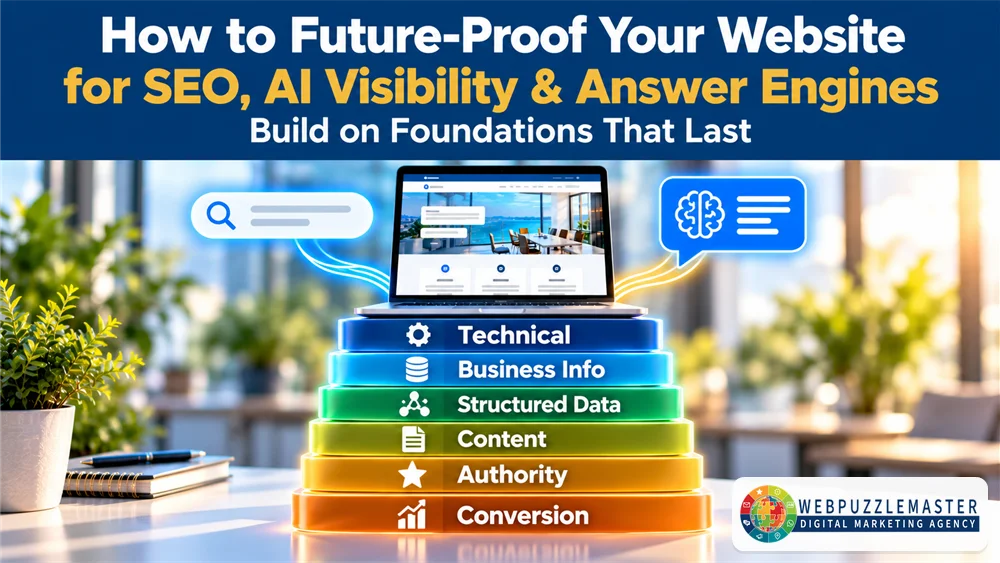
Every few months brings a new search feature, AI assistant or answer engine, and business owners reasonably ask whether their website will keep up. The good news is that you don’t need to chase every change. If you future-proof your website around a few durable principles, it can stay visible as discovery moves from traditional results pages to AI-generated answers and recommendations.
This article is for business owners and marketing leaders who have invested in a website and SEO but aren’t sure whether that investment will hold up in AI-driven search. You’ll learn which foundations matter across traditional search, AI visibility and answer engines, which tactics are likely to age poorly, and how to build a website that becomes more valuable over time instead of needing a rebuild every time search changes.
Key Takeaways
What You’ll Learn:
- Why durable fundamentals such as clarity, structure, accessibility and credibility matter more than reacting to each new search feature.
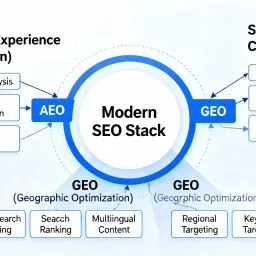
- The technical, content and authority layers that support SEO, AI visibility and answer engines at the same time.
- How structured data, clear entity information and well-organized content help machines understand your business.
- Which shortcuts are likely to stop working and why.
- How AI Visibility Engineering™ connects website architecture with the broader signals AI systems use, building on how structured content architecture strengthens AI visibility and SEO.
Why Websites Built for Yesterday’s Search Fall Behind
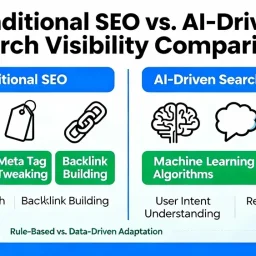
Many business websites were built when the goal was simple: rank a page for a keyword and get the click. That model still matters, but it’s no longer the whole picture.
Today, a potential customer might:
- Ask an AI assistant to recommend a provider and never see a list of links.
- Read an AI-generated summary at the top of search results that pulls from several sources.
- Use voice search, Maps or a chat interface instead of typing a query.
- Compare businesses based on reviews, profiles and third-party mentions before visiting any website.
Websites built around thin keyword pages, vague service descriptions or content that exists mainly to rank tend to struggle in this environment. AI systems try to understand what a business is, what it knows and whether credible sources support it. If the website doesn’t make that clear, the business is harder to include in answers, even if it still ranks for some terms.
The risk for businesses is gradual: steady or falling traffic, fewer qualified inquiries and competitors showing up in AI answers more often. Because the change is gradual, it’s easy to miss until the gap is significant. For many of the businesses we review, rankings remain mixed while AI-driven discovery grows, which is why SEO and AI visibility need to be planned together rather than as separate projects.
The Durable Foundations of a Future-Proof Website
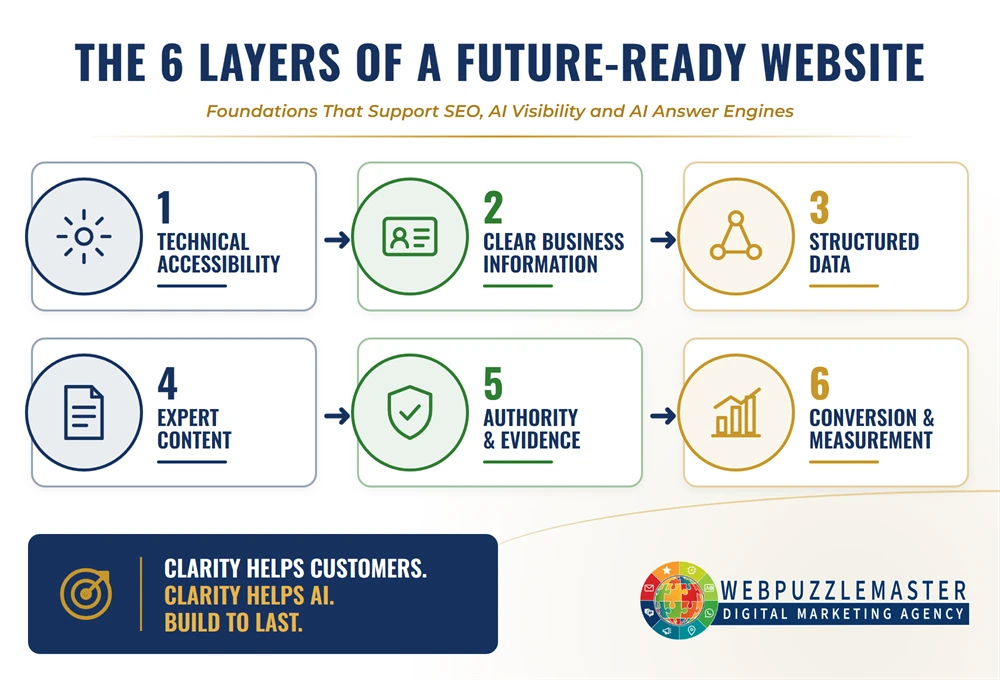
Search technology will keep changing. The things search and AI systems need from a website change much more slowly. A future-proof website is built in layers.
Layer 1: Technical Accessibility
If systems can’t reliably reach and read your content, nothing else matters. That means:
- Fast, stable performance on mobile and desktop.
- Clean, crawlable HTML, with important content not hidden behind scripts, images of text or logins.
- A logical URL and navigation structure with working internal links.
- Secure hosting, HTTPS and regular maintenance.
- No duplicate, outdated or conflicting pages competing for the same topic.
Layer 2: Clear Entity and Business Information
AI systems think in terms of entities: businesses, people, services, places and topics, and the relationships among them. Your website should state plainly who you are, what you offer, who you serve, where you operate and who leads the business. That information should match your Google Business Profile, directories and social profiles.
Layer 3: Structured Data
Schema markup gives machines a labeled version of key facts: organization, local business, services, people, FAQs, articles, reviews and more. It doesn’t replace good content, but it reduces ambiguity and helps systems connect the dots. Structured data should accurately reflect what’s visible on the page.
Layer 4: Content Architecture That Demonstrates Expertise
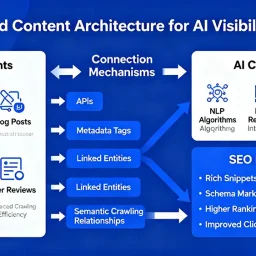
Instead of disconnected blog posts, organize content around the topics your business should be known for. Pillar pages, supporting articles, service pages, FAQs and case examples should link to and reinforce each other. Answer the questions customers actually ask, clearly and directly, near the top of the relevant page. That is what answer engines look for.
Layer 5: Authority and Evidence
Claims need support. Reviews, case examples, credentials, author information, media mentions, partnerships and citations from credible sources all help establish that the business is what it says it is.
Layer 6: Conversion and Measurement
Visibility only matters if visitors can take action and you can see what’s working. Clear calls to action, connected forms and CRM, and analytics that track leads by source make it possible to measure whether AI-driven discovery is producing business results.
How the Layers Work Together
Each layer supports the others. Structured data is more trustworthy when it matches clear content. Content earns more visibility when it’s technically accessible. Authority signals carry more weight when business information is consistent. This connected approach is the core of AI Visibility Engineering™, which helps search and AI systems understand, trust and recommend your business.
Practical Example: Two Websites, One Search Shift
Consider two professional-services firms in the same city, each with an attractive website and similar traditional rankings.
The first firm’s website has short service pages with general wording, a blog with dozens of loosely related posts and no author information. Its address appears in two different formats across the web, and the “About” page says little about the team’s experience.
The second firm has fewer pages, but each service page explains who the service is for, what problems it solves and what the process looks like, and it ends with FAQs. Articles are organized around three core topics and link back to the relevant services. Team bios list credentials. Schema markup identifies the business, its services and its people, and the information matches its Google Business Profile.
When a prospective client asks an AI assistant for a recommendation, the second firm gives the system far more clear, consistent and supported information to work with. Neither firm did anything dramatic. The second simply built on durable foundations.
The lesson: future-proofing is less about predicting the next search feature and more about removing ambiguity. Results vary by market and query, and no website can guarantee AI placement, but clarity and credibility make a business easier to understand and recommend.
Shortcuts That Won’t Survive the Next Search Shift
- Mass-produced, low-value content. Publishing large volumes of generic articles, whether written by people or AI, rarely builds authority and can dilute the topics you want to be known for.
- Keyword stuffing and near-duplicate location pages. Pages that swap a city name and repeat the same text add little value for customers or machines.
- Schema that doesn’t match the page. Marking up reviews, FAQs or services that aren’t visible or accurate undermines trust.
- Ignoring off-site consistency. Outdated directory listings and mismatched profiles create conflicting signals about basic facts.
- Hiding key information. Pricing approaches, service areas, credentials and processes buried in PDFs or images are harder to interpret.
- Treating AI visibility as a separate project. Bolting “AI optimization” onto a weak website rarely works. The same foundations support both traditional and AI search.
- Neglecting what happens after the visit. A site that ranks or gets cited but doesn’t convert or connect to follow-up wastes the visibility it earns. A fast, conversion-focused website architecture protects that investment.
What a Future-Ready Website Looks Like
A future-ready website is not one that’s been optimized once. It’s one that’s maintained as a living source of truth about the business.
- A clear, consistent description of the business, its services, people and locations, matched across the web.
- Content organized around core topics, with direct answers to real customer questions.
- Accurate structured data that reflects the visible content.
- Strong technical health: speed, mobile usability, security and crawlability.
- Visible evidence of expertise and reputation.
- Connected conversion paths, with forms and calls feeding a CRM and automated follow-up that turns new visibility into conversations.
- Regular reviews that monitor how the business appears in search and AI answers, update outdated information and fill content gaps.
The long-term value of taking time to future-proof your website is resilience. When search changes again, a website built this way needs adjustments, not a rebuild, and the clarity that helps machines also helps customers decide.
Frequently Asked Questions
1. What does it mean to future-proof your website for search?
It means building the website on durable foundations, including technical accessibility, clear business information, structured data, organized expert content, authority signals and measurement, so it stays visible as search and AI discovery evolve.
2. Is SEO still relevant with AI answer engines?
Yes. AI systems still depend on being able to find, access and understand web content. SEO fundamentals remain essential, and AI visibility builds on top of them.
3. What is an AI answer engine?
An AI answer engine generates a direct response to a question by drawing on multiple sources instead of only showing a list of links. Examples include AI-powered search summaries and AI assistants.
4. Does structured data guarantee AI visibility?
No. Structured data helps machines interpret key facts, but it works best alongside clear content, consistent business information and credible authority signals.
5. Should I rebuild my website to prepare for AI search?
Not necessarily. Many websites can be improved by clarifying content, fixing technical issues, adding accurate schema and reorganizing existing pages. A rebuild makes sense when the platform or structure itself is holding the site back.
6. Will AI-generated content hurt my visibility?
The tool matters less than the result. Generic, repetitive or inaccurate content tends to perform poorly. Content that is accurate, useful, reviewed by an expert and connected to your areas of expertise is more valuable.
7. How do I know if my business appears in AI answers?
Test questions your customers would ask in AI tools, monitor how your business is described and which sources are cited, and track referral traffic and leads where possible. Single results vary, so look for patterns over time.
8. How important is website speed for AI visibility?
Speed and stability affect user experience and how easily systems can access content. A slow, unreliable site can limit visibility and conversions.
9. Why does consistent business information matter?
When your name, services, locations and other key facts match across your website and other sources, AI systems and customers have less reason to doubt which information is correct.
10. How often should I review my website for search changes?
Review key pages, technical health and business information at least quarterly, and whenever your services, locations or positioning change.
Conclusion
You can’t predict every change in search, but you can build a website that adapts to them. When you future-proof your website, you focus on what both traditional search and AI systems consistently need: accessible pages, clear and consistent business information, accurate structured data, organized expert content, credible evidence and a path to action.
Businesses that build on those foundations spend less time reacting and more time growing. Start by identifying where your website is unclear, inconsistent or hard for systems to read, and fix those gaps before chasing the next trend.
How Webpuzzlemaster Can Help
Webpuzzlemaster’s AI Visibility Engineering™ approach evaluates your website as part of a connected digital system: technical foundation, content architecture, structured data, business information across the web, authority signals, conversion paths and measurement.
We identify where your site is already strong, where ambiguity or technical barriers limit visibility, and which changes will have the greatest impact, so you can improve what you have instead of rebuilding unnecessarily. Our work connects all four pillars: AI visibility and SEO, website performance and conversion, CRM and automation, and local visibility for businesses that serve specific markets.
About Ruth Kuttler
Ruth Kuttler, AI Visibility Engineer™ & Digital Strategy Architect, helps businesses become easier for customers and AI systems to find, understand, trust and recommend. Her work combines SEO, AI visibility, website architecture, structured content and measurement into one strategy.
Learn more about Ruth Kuttler and Webpuzzlemaster’s approach to integrated digital growth.
Your Next Step: Check How Ready Your Website Is
Before deciding what to change, find out where you stand. The Webpuzzlemaster AI Readiness Assessment evaluates six connected areas, including AI visibility and discoverability, content and business knowledge, brand authority, and your website’s conversion and measurement foundation. You’ll receive an overall readiness score, category-level results and recommendations for what to strengthen first.