

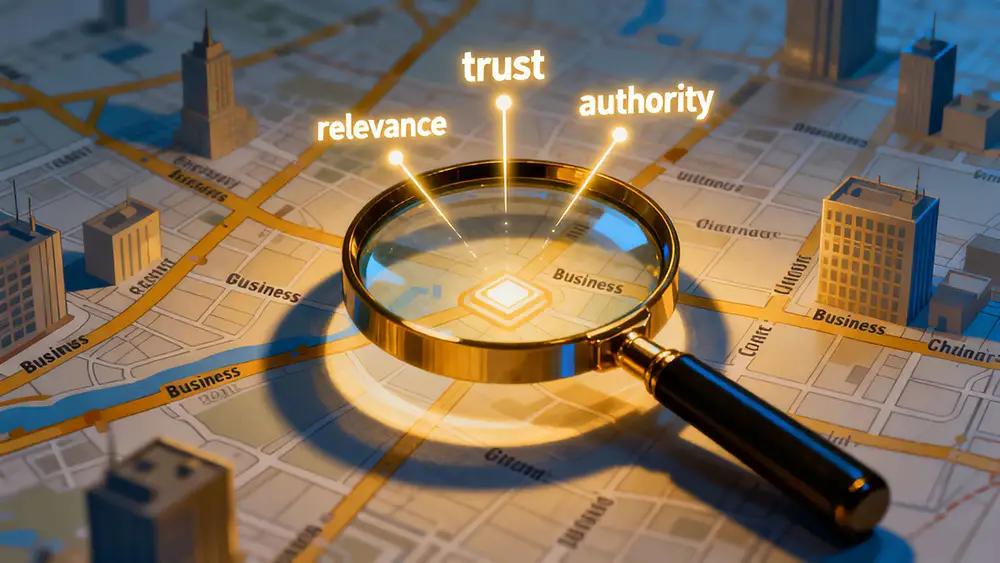
For local businesses, success isn’t just about having the best services; it’s about being seen by the right customers at the right time. Many business owners have strong offerings but suffer from weak visibility, watching competitors with less to offer unfairly outrank them. This is often due to a lack of authority signals that search engines can trust. In today’s competitive geographic markets, building local authority is essential. Search engines rely on entity credibility, relevance, and prominence to determine which businesses to show in local results. By strengthening these local ranking factors, you can align with customer intent and drive a consistent flow of local leads for sustainable growth.
Key Takeaways
- Why local authority building and search engine trust signals directly impact local visibility and customer trust.
- How weak visibility and low trust from search engines limit calls, inquiries, and conversions.
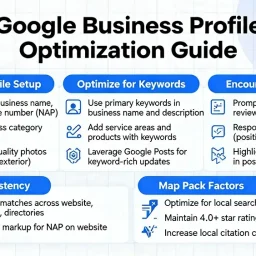
- How Google Business Profile optimization, local citations, and reviews strengthen relevance across local channels.
- Why consistency and credibility in your digital presence determine long-term local growth.
Why This Concept Matters
Local search has evolved beyond simple keyword matching. Today, search engines and AI-powered recommendation systems analyze a complex web of signals to determine which businesses are discovered, contacted, and chosen. They assess your entity’s clarity—how well they understand who you are, what you do, and where you operate.
Factors like customer reviews, proximity to the searcher, and consistent business information across the web all contribute to your perceived authority. Understanding how modern AI-driven search engines re-evaluate business credibility is crucial for influencing which businesses are ultimately recommended to high-intent customers.
Real-World Example
A local plumbing company, “AquaFlow Experts,” offers exceptional 24/7 emergency services and has highly skilled technicians. However, they struggle to appear in the top local search results. A competitor, “Citywide Pipes,” consistently ranks higher despite having fewer positive reviews.
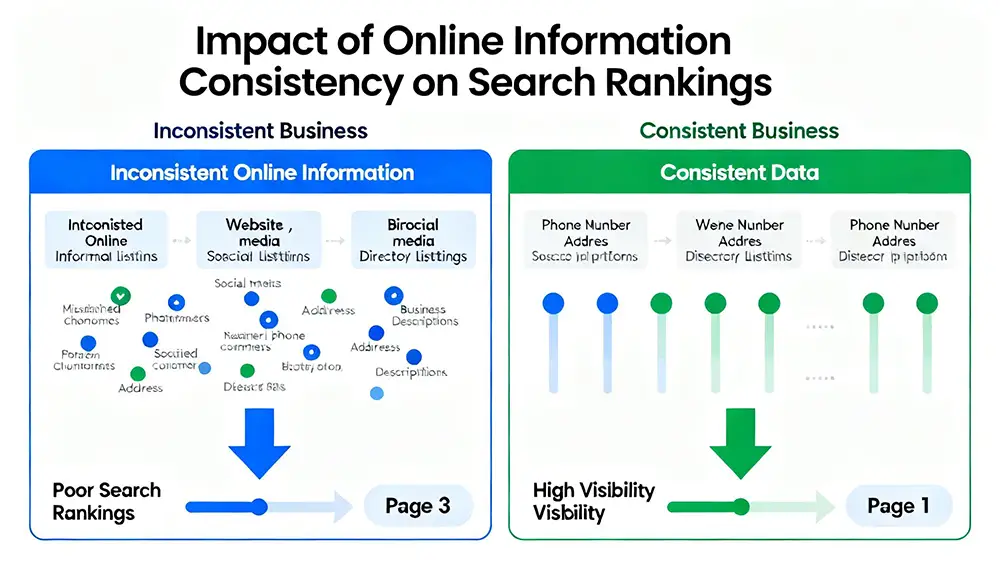
The problem is that AquaFlow’s authority signals are fragmented. Their business name is listed differently across various directories, their address is inconsistent, and their Google Business Profile is incomplete. This lack of entity consistency confuses search engines, diminishing their trust and authority. By structuring their local optimization, they can fix these issues, leading to better visibility, more qualified inquiries, and a significant increase in revenue.
Common Mistakes
Many businesses make critical errors that weaken their local authority signals. These missteps often include:
- Focusing only on traditional keywords while ignoring entity and proximity signals.
- Neglecting Google Business Profile signals by leaving profiles incomplete or unoptimized.
- Allowing inconsistent Name, Address, and Phone (NAP) data to spread across online directories.
- Ignoring customer reviews, both positive and negative.
- Publishing thin local content that fails to demonstrate geographic relevance and expertise.
- Pursuing disconnected marketing efforts instead of an integrated strategy, which is key to avoiding common pitfalls that can undermine your local business growth engine.
What You Should Aim For
Successful local authority building results in tangible business outcomes. Your goal should be to achieve:
- Clear local entity signals: Search engines unambiguously understand your business’s identity, services, and service area.
- Consistent business information: Your NAP data is identical and accurate across all major platforms and directories.
- Strong, authentic customer reviews: A steady stream of positive feedback builds social proof and trust.
- High-intent local visibility: You appear prominently in the map pack and local results for relevant, purchase-ready queries.
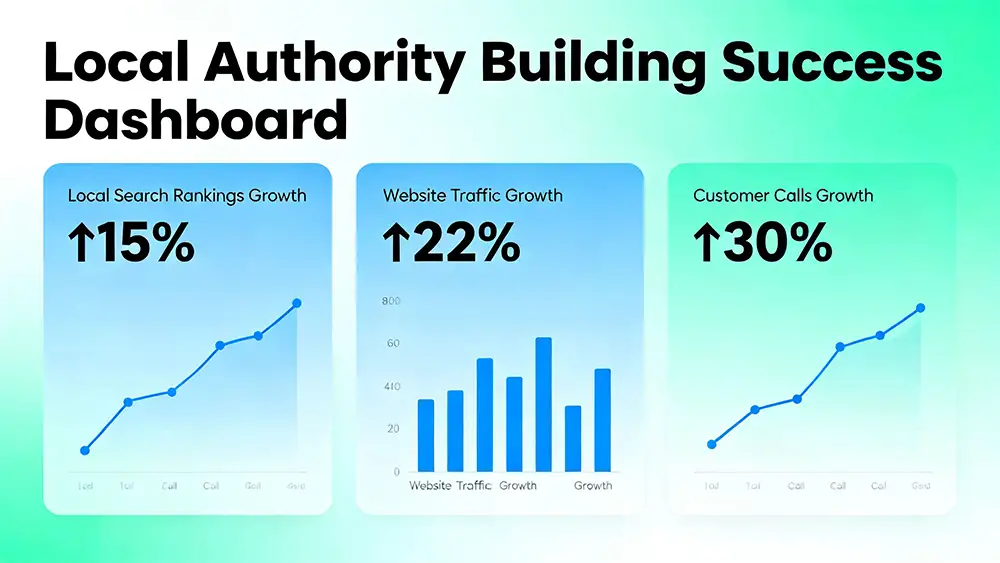
- Predictable inbound leads: Your phone rings consistently with qualified customers who are ready to convert.
Supporting Data & Research
While specific statistics change, the core principles of local consumer behavior remain constant. Proximity is a dominant factor, with a majority of mobile searches having local intent—think “plumber near me.” Customer reviews function as powerful social proof, with most consumers trusting online reviews as much as personal recommendations. Furthermore, search engines reward trust signals.
A business with consistent NAP data and a well-maintained online presence is seen as more credible and reliable. This digital credibility extends to your primary online asset, and ensuring your website performance contributes positively to local business digital success is a foundational element of building that trust.
Frequently Asked Questions
What are the most important signals for local search ranking?
The most critical signals include a fully optimized Google Business Profile, the proximity of your business to the searcher, the quantity and quality of customer reviews, and the consistency of your business information (NAP) across the web.
How does Google determine which business is most relevant for a local query?
Google assesses relevance by analyzing your business category, the services you list, the content on your website, and the keywords within customer reviews to match your business to a user’s search query.
Why is my Google Business Profile so important?
Your Google Business Profile is a primary source of information for Google Search and Maps. It directly influences your visibility in the local pack, provides crucial information to customers, and is a major hub for collecting reviews.
Do customer reviews really affect my ranking?
Yes, absolutely. A high volume of positive reviews signals to search engines that your business is trustworthy and popular, which can significantly boost your local rankings.
What is NAP consistency and why does it matter?
NAP (Name, Address, Phone number) consistency means your core business information is identical across all online platforms. It’s a foundational trust signal that helps search engines verify your business’s existence and location.
How can I build authority for a service-area business without a physical storefront?
Service-area businesses can build authority by clearly defining their service areas in their Google Business Profile, creating location-specific service pages on their website, and acquiring reviews from customers in those areas.
Is it better to have more reviews or better-quality reviews?
Both are important. A steady stream of new reviews is crucial, but the sentiment and detail within those reviews also matter. Aim for a healthy balance of consistent, positive, and detailed feedback.
How long does it take to build local authority?
Building strong local authority is an ongoing process, not a one-time task. While some improvements can be seen in a few months, establishing dominance in a competitive market can take a year or more of consistent effort.
Can local backlinks help my business rank higher?
Yes, backlinks from other relevant local businesses, community organizations, or local news sites act as endorsements and can significantly strengthen your geographic relevance and authority.
What's the difference between relevance and prominence in local SEO?
Relevance is how well your business profile matches a user’s search query. Prominence refers to how well-known your business is, based on factors like reviews, citations, and overall online presence.
Webpuzzlemaster Website Performance Services
Local SEO strategy, Google Business Profile optimization, authority and trust signal development, local content strategy, reputation and review management
Delivered by Webpuzzlemaster Digital Marketing Agency, led by Ruth Kuttler.
Webpuzzlemaster helps local businesses translate their real-world excellence into digital authority. We focus on building robust trust signals that search engines and customers reward. Our strategies ensure your business gets discovered by high-intent customers in your service area by implementing innovative local SEO services designed to outperform competitors. We transform your digital presence into a predictable engine for qualified leads and sustainable growth.
About the Author
As a specialist in local business growth, the author focuses on creating digital strategies that drive measurable results. With deep expertise in local SEO, entity optimization, and conversion-focused web design, they help businesses build the authority and visibility needed to dominate their local market. The author’s approach is rooted in a comprehensive understanding of how search engines and customers make decisions, ensuring marketing efforts translate directly into increased revenue.
Your Next Step
If your business delivers great service but still struggles to rank locally, the issue isn’t competition—it’s incomplete authority signals. The next step is to audit how search engines currently see your business: Google Business Profile strength, review velocity and quality, citation consistency, local content relevance, and trust signals across the web. Local authority is built through alignment, not hacks. When these signals work together, search engines gain confidence in your business—and rankings, visibility, and lead quality follow.